ESP 32 Elapsed Timer Alerting Framework
A totally flexible and general timer interrupt framework for designing solutions needing one or many individual elapsing and separate timers
Devices & Components
ESP32S
Software & Tools

Arduino IDE
Project description
Code
Example 1: An ESP 32 sketch to configure an interrupt timer
c_cpp
A sketch to demonstrate configuring an ESP 32 interrupt timer
1//
2// Basic example of ESP 32 interrupt timer sketch
3//
4// This  example and code is in the public domain and
5// may be used without restriction  and without warranty.
6//
7volatile int interrupt_counter;
8volatile int current_interrupt_counter;
9int  total_interrupt_counter;
10
11hw_timer_t * timer = NULL;
12portMUX_TYPE timerMux  = portMUX_INITIALIZER_UNLOCKED;
13
14void IRAM_ATTR onTimer() {
15  portENTER_CRITICAL_ISR(&timerMux);
16  interrupt_counter++;
17  portEXIT_CRITICAL_ISR(&timerMux);
18}
19
20void setup()  {
21  Serial.begin(115200);
22  timer = timerBegin(0, 80, true);    // prescale  down to microsecond timing
23  timerAttachInterrupt(timer, &onTimer, true);
24  timerAlarmWrite(timer, 1000, true); // step down to millisecond interrupts
25  timerAlarmEnable(timer);
26}
27
28void loop() {
29  // Take a copy of the  current interrupt_counter value
30  // so we may test it in our if/then process  without
31  // running into a conflict between our ISR and main
32  // loop processing
33  portENTER_CRITICAL(&timerMux);
34  current_interrupt_counter = interrupt_counter;
35  portEXIT_CRITICAL(&timerMux);
36  if (current_interrupt_counter > 0) {
37    //  A timer interrupt has occurred
38    portENTER_CRITICAL(&timerMux);
39    interrupt_counter--;
40    portEXIT_CRITICAL(&timerMux);
41    total_interrupt_counter++;
42    // report  every 1000 interrupts, ie every 1 second
43    if (total_interrupt_counter % 1000  == 0) {
44      Serial.print("A timer interrupt has occurred. Total number: ");
45      Serial.println(total_interrupt_counter);
46      Serial.flush();
47    }
48  }
49}
50
Example 3: A Home Environmental Monitor based on the ETA Framework
c_cpp
An example of how we can use the ETA Framework for developing projects needing multiple elapsing timers. This dummy example will monitor temp, humidity, soil moisture and light levels.
1//
2// R D Bentley (Stafford, UK), May 2022
3//
4// This example  and code is in the public domain and
5// may be used without restriction and without  warranty.
6//
7// ESP 32 Multiple Elapsed Timer Alerting - Home Environmental  Monitoring Example
8// ^^^^^^^^^^^^^^^^^^^^^^^^^^^^^^^^^^^^^^^^^^^^^^^^^^^^^^^^^^^^^^^^^^^^^^^^^^^^^^
9//
10//  This example shows how the ETA framework can be used to define elapsed time
11//  alerts that can be used to process specific event requirements, here a home
12//  environment monitoring requirement.
13// The example does not provide a complete  solution, rather it provides the hooks
14// and eyes for fully integrated solution  for the monitoring and adjustments of
15// temperature, humidity, light and soil  moisture that my be necessary for maintaining
16// for example, garden plants,  etc.
17//
18// %%%%%%%%%%%%%%%%%%%%%%%%%%%%%%%%%%%%%
19// % Timer declarations  and timer ISR  %
20// % Initialisation occurs in setup()  %
21// %%%%%%%%%%%%%%%%%%%%%%%%%%%%%%%%%%%%%
22//
23volatile  int interrupt_counter; // used to signify a timer interrupt event has occurred
24volatile  int current_interrupt_counter;
25hw_timer_t * timer = NULL;      // establish timer  structure
26portMUX_TYPE timerMux = portMUX_INITIALIZER_UNLOCKED;
27
28//
29//  The timer_ISR simply increments the varuable interrupt_counter.
30// This variable  is decremented by the main loop which will deal with
31// timer interrupt events  until they have all been processed, ie
32// until interrupt_counter = 0
33//
34void  IRAM_ATTR timer_ISR() {
35  portENTER_CRITICAL_ISR(&timerMux);
36  interrupt_counter++;
37  portEXIT_CRITICAL_ISR(&timerMux);
38}
39
40#define max_num_timers      4   //  4 timers on ESP 32 - 0-3
41#define default_timer       0   // used if specified  timer is invalid
42
43//
44// Create an ESP 32 timer instance for given parameter
45//
46void  create_and_start_timer(uint8_t timer_num) {
47  if (timer_num >= max_num_timers)  {// valid range is 0 to 3
48    Serial.println("!!Invalid timer number - restting  to default timer!!");
49    Serial.flush();
50    timer_num = default_timer;
51  }
52  // set up the timer interrupt for 1 millisecond interrupts
53  timer =  timerBegin(timer_num, 80, true);        // 80 Mhz processor, scale down to 1 Mhz
54  timerAttachInterrupt(timer, &timer_ISR, true);  // link to our interrupt service  routine (ISR)
55  timerAlarmWrite(timer, 1000, true);             // define for  1 millisecond interrupts 0.001 Mhz
56  timerAlarmEnable(timer);                        //  start timer
57}
58
59// %%%%%%%%%%%%%%%%%%%%%%%%%%%%%%%%%%%%%%%%%%%%%%%%%%%%
60//  % Elapsed Time Alert(s) declarations and functions %
61// %%%%%%%%%%%%%%%%%%%%%%%%%%%%%%%%%%%%%%%%%%%%%%%%%%%%
62
63#define  max_ETAs               7 // User defined - we are configuring for 7 ETAs
64
65//  ETA function and decision control macros
66#define one_off_ETA            1
67#define  recurring_ETA          2
68#define ETA_inserted           1 // positive result  for success
69#define ETA_insert_failure    -1 // negative result for failure
70#define  ETA_invalid_type      -2 // ditto
71#define ETA_duplicate         -3 // ditto
72#define  ETA_extracted       true // converse is !ETA_extracted
73#define ETA_deleted         true  // converse is !ETA_deleted
74
75// ETA_struct is the control structure at the  heart of this design
76// It will hold details for each ETA created
77struct ETA_struct  {
78  uint8_t   ETA_type;
79  uint16_t  ETA_alert_id; // alert id range is 0 -  65,535
80  uint32_t  ETA_interval;
81  uint32_t  ETA_count_down;
82} ETAs[max_ETAs];
83
84//  ETA_alerts_struct is used dynamically to record the details of each
85// ETA that  has elapsed.  It is this structure that is used for processing
86// elapsed ETAs.  It has the form that entry [0] holds a count of the number
87// of entries that  follow in the structure.  ETA details then follow on from
88// entry [1], for example:
89//  [0]:3        (int)
90// [1]:1,  23,  (unit8_t/uint16_t)
91// [2]:2, 2047, (unit8_t/uint16_t)
92//  [3]:1,  97   (unit8_t/uint16_t)
93struct ETA_alerts_struct {
94  uint8_t  ETA_type;
95  uint16_t ETA_alert_id;
96  union {
97    uint16_t ETA_num_alerts;
98  };
99}  ETA_alerts[max_ETAs + 1]; // reserve an entry for the list count
100
101// Creates  an ETA with the given parameters.  Validation of the parameters
102// is carried  out.  The ETA is created if there is available space in the
103// ETA structure.  Note also that ETAs must be unique in the ETA structure.
104// An attempt to create  a duplicate ETA will generate an error
105//
106int create_ETA(uint8_t   ETA_type,
107               uint16_t  ETA_alert_id,
108               uint32_t  ETA_interval)  {
109  if (ETA_type != one_off_ETA &&
110      ETA_type != recurring_ETA)return  ETA_invalid_type;
111  int free_entry = -1;  // used to track first free ETA entry  in ETA list
112  for (int entry = max_ETAs - 1; entry >= 0; entry--) {
113    if  (ETAs[entry].ETA_type == 0) {
114      // this is an empty slot so remember it
115      free_entry = entry;
116    } else {
117      // this entry is already occupied  so check if it is the same
118      // as the ETA create requested
119      if (ETAs[entry].ETA_type  == ETA_type &&
120          ETAs[entry].ETA_alert_id == ETA_alert_id) {
121        //  an ETA entry already exists for the requested ETA create
122        return ETA_duplicate;
123      }
124    }
125  }
126  // ok, so requested ETA is not already in the ETA list
127  // so add it if there is space, ie free_entry != -1
128  if (free_entry != -1)  {
129    ETAs[free_entry].ETA_type       = ETA_type; // eg one off or recurring  ETA
130    ETAs[free_entry].ETA_alert_id   = ETA_alert_id;
131    ETAs[free_entry].ETA_interval   = ETA_interval;
132    ETAs[free_entry].ETA_count_down = ETA_interval;
133    return  ETA_inserted;
134  }
135  return ETA_insert_failure;
136}
137
138//
139// Delete  the given ETA from the ETA control structure
140//
141bool delete_ETA(uint8_t  ETA_type,
142                uint16_t  ETA_alert_id) {
143  for (uint8_t entry = 0; entry < max_ETAs;  entry++) {
144    if (ETAs[entry].ETA_type     == ETA_type &&
145        ETAs[entry].ETA_alert_id  == ETA_alert_id) {
146      // found, so delete it
147      ETAs[entry].ETA_type  = 0;
148      return ETA_deleted;
149    }
150  }
151  return !ETA_deleted;
152}
153
154//
155//  Prints the ETA structure contents. Useful for confirming
156// that the configuration  for ETA is as required
157//
158void print_ETAs() {
159  Serial.begin(115200);
160  for (uint8_t entry = 0; entry < max_ETAs; entry++) {
161    Serial.print("\
162ETA  entry = ");
163    Serial.print(entry);
164    if (ETAs[entry].ETA_type != 0) {
165      Serial.print("\
166 ETA_type = ");
167      if (ETAs[entry].ETA_type == one_off_ETA)
168        Serial.println("one off ETA");
169      else Serial.println("recurring  ETA");
170      Serial.print(" ETA_alert_id    = ");
171      Serial.println(ETAs[entry].ETA_alert_id);
172      Serial.print(" ETA_interval    = ");
173      Serial.println(ETAs[entry].ETA_interval);
174      Serial.print(" ETA_count_down  = ");
175      Serial.println(ETAs[entry].ETA_count_down);
176    } else {
177      Serial.println(" *** entry empty");
178    }
179  }
180  Serial.flush();
181}
182
183//
184// Extracts an ETA alert from the ETA alert  structure.  Note that the
185// entries in this structure have been generated because  their respective
186// ETAs have elapsed.  The ETA alert structure should be continually
187//  processed until it is empty. If an entry is removed then its ETA type
188// and  ETA alert id are returned in ETA_type and ETA_alert_id respectively
189// along  with a success return value (ETA_extracted). Otherwise these variables
190// are  set to 0 with a corresponding failure return value (!ETA_extracted)
191//
192bool  get_ETA_alert(uint8_t &ETA_type,
193                   uint16_t &ETA_alert_id) {
194  uint8_t last_entry = ETA_alerts[0].ETA_num_alerts;
195  if (last_entry > 0) {
196    ETA_type     = ETA_alerts[last_entry].ETA_type;
197    ETA_alert_id = ETA_alerts[last_entry].ETA_alert_id;
198    ETA_alerts[last_entry].ETA_type     = 0;
199    ETA_alerts[last_entry].ETA_alert_id  = 0;
200    ETA_alerts[0].ETA_num_alerts--; // reduce list by 1
201    return ETA_extracted;
202  }
203  ETA_type     = 0;
204  ETA_alert_id = 0;
205  return !ETA_extracted;
206}
207
208//
209//  clear down the ETA structure and reset the alert count
210// of the ETA alerts strucure
211//
212void  clear_ETAs() {
213  // ETA_type = 0 signifies an empty slot
214  for (uint8_t entry  = 0; entry < max_ETAs; entry++) {
215    ETAs[entry].ETA_type = 0;
216  }
217  ETA_alerts[0].ETA_num_alerts  = 0; // reset alert list counter
218}
219
220//
221// The function scans the ETA  control, structure and decrements any ETAs
222// defined.  If an ETA has reached  its count down interval it will be added
223// to the ETA_alerts structure so that  it may be processed subsequently
224// and asynchronously
225//
226void update_ETAs()  {
227  for (uint8_t entry = 0; entry < max_ETAs; entry++) {
228    if (ETAs[entry].ETA_type  != 0) {
229      // this ETA entry is defined
230      if (ETAs[entry].ETA_count_down  > 0) {
231        // decrement count down timer, it has not yet elapsed
232        ETAs[entry].ETA_count_down--;  // reduce elapse interval by 1
233        if (ETAs[entry].ETA_count_down == 0) {
234          // add this lapsed ETA alert to the ETA alert list
235          int next_entry  = ETA_alerts[0].ETA_num_alerts + 1; // next free entry in the list
236          ETA_alerts[next_entry].ETA_type     = ETAs[entry].ETA_type;
237          ETA_alerts[next_entry].ETA_alert_id =  ETAs[entry].ETA_alert_id;
238          ETA_alerts[0].ETA_num_alerts        = next_entry;
239          // now determine if this ETA needs to be reset or removed/deleted
240          if (ETAs[entry].ETA_type == recurring_ETA) {
241            // recurring  ETA so reset the elapse interval count down
242            ETAs[entry].ETA_count_down  = ETAs[entry].ETA_interval;
243          } else {
244            // this must be  a one off ETA, so delete it
245            ETAs[entry].ETA_type = 0;
246          }
247        }
248      }
249    }
250  }
251}
252
253// %%%%%%%%%%%%%%%%%%%%%%%%%%%%%%%%%%%%%%%%%%%%%%%%%%%%%%%%%%%%%%%%%%%
254//  % Data specific to this use of the ETA framework for this example %
255// %%%%%%%%%%%%%%%%%%%%%%%%%%%%%%%%%%%%%%%%%%%%%%%%%%%%%%%%%%%%%%%%%%%
256//
257//  These macros can be used for creating ETAs and are provided
258// for convenience  of programming standard intervals, as required.
259// They may be modified to achieve  the desired count down frequencies,
260// for example 2 * one_second, 5 * minute  + 500, etc (all in milliseconds)
261//
262const uint32_t one_day    = 86400000;  // millisecs in 24 hours
263const uint32_t one_hour   =  3600000; // millisecs in  1 hour
264const uint16_t one_minute =    60000; // millisecs in 1 minute
265const  uint16_t one_second =     1000; // millisecs in 1 second
266
267// These macros  define our ETA alert IDs for our sketch design/example
268#define heart_beat       LED_BUILTIN  // ETA alert ID - GPIO pin of in-built LED
269#define check_temp      10 // ETA  alert ID - an arbitary but unique value
270#define check_moisture  20 // ETA alert  ID - an arbitary but unique value
271#define check_humidity  30 // ETA alert ID  - an arbitary but unique value
272#define check_light     40 // ETA alert ID - an  arbitary but unique value
273#define watchdog       100 // ETA alert ID - an arbitary  but unique value
274#define report_stats   200 // ETA alert ID - an arbitary but  unique value
275
276// Now put together all of our ETA configs so we may create  them more
277// easily in our setup process.  The array is defined as follows:
278//  my_ETA_data[][0] is the ETA_type, one off or recurring
279//            [][1] is  the ETA alert id defining the function/purpose of the ETA
280//            [][2]  is the duration for the ETA's elapsed time count down (duration)
281//                  in  milliseconds
282//
283int my_ETA_data[max_ETAs][3] = {
284  recurring_ETA, heart_beat,     one_second / 2, // heart beat data
285  recurring_ETA, check_temp,     10 *  one_second, //5 * one_minute, // temperature check data
286  recurring_ETA, check_moisture,  5 * one_second,  //20 * one_minute,// soil moisture check data
287  recurring_ETA,  check_humidity, 20 * one_second, //5 * one_minute, // humidity check data
288  recurring_ETA,  check_light,    15 * one_second, //one_hour,       // light level check data
289  recurring_ETA, watchdog,       3 * one_second,     // watchdog data
290  recurring_ETA,  report_stats,   one_minute //one_day         // statistics data
291};
292
293//
294//  statistics variables
295//
296uint16_t temp_cycles,  moisture_cycles, humidity_cycles,
297         light_cycles, watch_cycles,    stats_cycles;
298
299// Establish the starting  parameters for temp, moisture, humidity and light levels
300// These will be modified  as the various sensors are read
301float min_temp = 25;
302float max_temp = 25;
303float  alert_high_temp = 50;
304float alert_low_temp  = -15;
305
306float min_moisture  = 65;
307float max_moisture = 65;
308float alert_high_moisture = 90;
309float alert_low_moister   = 25;
310
311float min_humidity = 80;
312float max_humidity = 80;
313float alert_high_humidity  = 95;
314float alert_low_humidity  = 10;
315
316float min_light = 75;
317float max_light  = 75;
318//
319// resets any gathered statistics
320//
321void reset_stats(bool  reset_all) {
322  temp_cycles     = 0;
323  moisture_cycles = 0;
324  humidity_cycles  = 0;
325  light_cycles    = 0;
326  watch_cycles    = 0;
327  if (reset_all) stats_cycles  = 0;
328}
329
330//
331// Dummy function to read temp
332//
333float read_temp()  {
334  static float temp = 25;
335  temp = pow(-1, random(1, 3)) + temp;
336  //  check for min and max values
337  if (temp > max_temp) max_temp = temp;
338  else  if (temp < min_temp) min_temp = temp;
339  return temp;
340}
341
342//
343// Dummy  function to read moisture
344//
345float read_moisture() {
346  static float moisture  = 65;
347  moisture = pow(-1, random(1, 3)) + moisture;
348  // check for min and  max values
349  if (moisture > max_moisture) max_moisture = moisture;
350  else  if (moisture < min_moisture) min_moisture = moisture;
351  return moisture;
352}
353
354//
355//  Dummy function to read humidity
356//
357float read_humidity() {
358  static float  humidity = 80;
359  humidity = pow(-1, random(1, 3)) + humidity;
360  // check for  min and max values
361  if (humidity > max_humidity) max_humidity = humidity;
362  else if (humidity < min_humidity) min_humidity = humidity;
363  return humidity;
364}
365
366//
367//  Dummy function to read light level
368//
369float read_light() {
370  static float  light = 75;
371  light = pow(-1, random(1, 3)) + light;
372  // check for min and  max values
373  if (light > max_light) max_light = light;
374  else if (light <  min_light) min_light = light;
375  return light;
376}
377
378void print_stats()  {
379  Serial.println("\
380Statistics:");
381  Serial.print("number stats cycles:  ");
382  Serial.println(stats_cycles);
383  Serial.print("number temperture cycles  : ");
384  Serial.print(temp_cycles);
385  Serial.print(",\	min/max temperature  = ");
386  Serial.print(min_temp);
387  Serial.print("/");
388  Serial.println(max_temp);
389  Serial.print("number moisture cycles   : ");
390  Serial.print(moisture_cycles);
391  Serial.print(",\	min/max moisture    = ");
392  Serial.print(min_moisture);
393  Serial.print("/");
394  Serial.println(max_moisture);
395  Serial.print("number  humidity cycles   : ");
396  Serial.print(humidity_cycles);
397  Serial.print(",\	min/max  humidity    = ");
398  Serial.print(min_humidity);
399  Serial.print("/");
400  Serial.println(max_humidity);
401  Serial.print("number light cycles      : ");
402  Serial.print(light_cycles);
403  Serial.print(",\	min/max light level = ");
404  Serial.print(min_light);
405  Serial.print("/");
406  Serial.println(max_light);
407  Serial.print("number watchdog cycles   : ");
408  Serial.println(watch_cycles);
409  Serial.println();
410  Serial.flush();
411}
412
413void setup() {
414  Serial.begin(115200);
415  // clear down the ETA structures
416  clear_ETAs();
417  // create ETAs before  the start of the timer interrupt process.
418  // We use the ETA data defined above  to create all the ETAs
419  // we require.  Note the error checking
420  int result;
421  uint8_t entry;
422  for (entry = 0; entry < max_ETAs; entry++) {
423    result  = create_ETA(my_ETA_data[entry][0], // ETA type
424                        my_ETA_data[entry][1],  // ETA alert id
425                        my_ETA_data[entry][2]);// ETA alert interval  (elapse/count down)
426    if (result < 0) {
427      Serial.print("create_ETA  error:");
428      if (result == ETA_invalid_type) Serial.println(" invalid ETA  type");
429      else {
430        if (result == ETA_duplicate) Serial.println("  duplicate ETA");
431        else Serial.println(" ETA insert failure");
432      }
433      Serial.flush();
434    }
435  }
436  reset_stats(true);  // reset all stats  variables
437  print_ETAs(); // confirm the ETA set ups
438  //
439  // initialise  the heart beat GPIO pin
440  pinMode(heart_beat, OUTPUT);
441  digitalWrite(heart_beat,  LOW); // set output to low
442  //
443  // finally, set up and start default timer
444  create_and_start_timer(default_timer);
445}
446
447void loop() {
448  // %%%%%%%%%%%%%%%%%%%%%%%%%%%%%%%%%%%%%%%%%%%%%%%%%%%%%%%%%%%%%%%%%%%%%%%%%%
449  // % This main loop design ensures that all timner inetrrupts get processed %
450  // % non-timer interrupt handling code may be added at the end of the main  %
451  // % timer interrupt processing section                                     %
452  // %%%%%%%%%%%%%%%%%%%%%%%%%%%%%%%%%%%%%%%%%%%%%%%%%%%%%%%%%%%%%%%%%%%%%%%%%%
453
454  // Take a copy of the current interrupt_counter value
455  // so we may test it  in our while/do process without
456  // running into a conflict between our ISR  and main
457  // loop processing
458  portENTER_CRITICAL(&timerMux);
459  current_interrupt_counter  = interrupt_counter;
460  portEXIT_CRITICAL(&timerMux);
461  while (current_interrupt_counter  > 0) {
462    // at least one timer event has occurred so process the ETAs
463    //  while we have unprocessed timer interrupt events
464    portENTER_CRITICAL(&timerMux);
465    interrupt_counter--;
466    current_interrupt_counter = interrupt_counter;
467    portEXIT_CRITICAL(&timerMux);
468    //
469    // Update the ETAs to decrement  their count downs for this
470    // timer interrupt cycle and create a list of  elapsed ETAs
471    update_ETAs();
472    //
473    // Now process any ETA alert  list of elasped ETAs. Keep processing
474    // the ETA_alert list until it has  been emptied
475    uint8_t ETA_type;
476    uint16_t ETA_alert_id;
477    while  (get_ETA_alert(ETA_type, ETA_alert_id) == ETA_extracted) {
478      // %%%%%%%%%%%%%%%%%%%%%%%%%%%%%%%%%%%%%%%%%%%%%%%%%%%%%%%%%%%%%%%%%%%
479      // % Put ETA elapsing code here, use 'ETA_type' and/or 'ETA_alert_id'%
480      // % for decision control and management                             %
481      // %%%%%%%%%%%%%%%%%%%%%%%%%%%%%%%%%%%%%%%%%%%%%%%%%%%%%%%%%%%%%%%%%%%
482      //
483      // We have an alert to process.
484      // In this design the  ETA_alert_id returned tells us which ETA alert we
485      // need to process -  we may ignore the ETA type as all are of type recurring
486      //
487      switch  (ETA_alert_id) {// switch on ETA_alter_id
488        case heart_beat:
489          //  Toggle the on board LED to show sketch operating
490          // The on board LED  pin is defined as the ETA_alert_id
491          digitalWrite(ETA_alert_id, digitalRead(ETA_alert_id)  ^ 1); // invert current status
492          break;
493        case check_temp:
494          // Code for processing temperature levels
495          Serial.println("Check  temperature process entered");
496          temp_cycles++;
497          float temp;
498          temp = read_temp();
499          // now decide if the current temperature  is too high or too low
500          // respond accordingly...
501          Serial.print("  Current temperature = ");
502          Serial.print(temp);
503          Serial.println("  C.");
504          break;
505        case check_moisture:
506          // Code  for processing moisture levels
507          Serial.println("Check moisture process  entered");
508          moisture_cycles++;
509          float moisture;
510          moisture  = read_moisture(); // read current moisture level
511          // now decide if  the current moisture is too high or too low
512          // respond accordingly...
513          Serial.print("  Current soil moisture = ");
514          Serial.print(moisture);
515          Serial.println("%.");
516          break;
517        case check_humidity:
518          // Code for processing humidity levels
519          Serial.println("Check  humidity process entered");
520          humidity_cycles++;
521          float  humidity;
522          humidity = read_humidity(); // read current humidiy level
523          // now decide if the current humidity is too high or too low
524          //  respond accordingly...
525          Serial.print("  Current humidity = ");
526          Serial.print(humidity);
527          Serial.println("%.");
528          break;
529        case check_light:
530          // Code for processing light levels
531          Serial.println("Check  light process entered");
532          light_cycles++;
533          float light;
534          light = read_light(); // read current ight level
535          // now decide  if the current light is too high or too low
536          // respond accordingly...
537          Serial.print("  Current light level = ");
538          Serial.println(light);
539          break;
540        case watchdog:
541          // Code for processing the  watchdog
542          Serial.println("Watchdog process entered");
543          watch_cycles++;
544          Serial.print("  number of watchdog cycles = ");
545          Serial.println(watch_cycles);
546          Serial.flush();
547          if (max_temp >= alert_high_temp || min_temp  <= alert_low_temp
548              || max_moisture >= alert_high_moisture || min_moisture  <= alert_low_moister
549              || max_humidity >= alert_high_humidity ||  min_humidity <= alert_low_humidity) {
550            // The environment is out of  spec!  Report via the internet target
551            // to raise an alert requiring  attention...
552            Serial.println("!!!!Environment out of spec!!!!");  // dummy alert
553            print_stats();
554          }
555          break;
556        case report_stats:
557          // Report daily statistics via the internet  to the target agent
558          stats_cycles++;
559          print_stats();
560          reset_stats(false); // reset stats apart from stats cycle count
561          break;
562        default:
563          // Shoud never arrive here!
564          Serial.println("Invalid  ETA_alert_id encountered!!");
565          break;
566      }
567      Serial.flush();  // flush the buffer
568    }
569  }
570  // %%%%%%%%%%%%%%%%%%%%%%%%%%%%%%%%%%%%%%%
571  // % Put any none ETA handling code here %
572  // %%%%%%%%%%%%%%%%%%%%%%%%%%%%%%%%%%%%%%%
573
574
575}
576
Example 2: The ETA Framework Sketch
c_cpp
The starting sketch for developing your own elapsed timer projects
1//
2// R D Bentley (Stafford, UK), May 2022
3//
4// This example  and code is in the public domain and
5// may be used without restriction and without  warranty.
6//
7// ESP 32 Multiple Elapsed Timer Alerting Framework
8// ^^^^^^^^^^^^^^^^^^^^^^^^^^^^^^^^^^^^^^^^^^^^^^^^
9//  ESP 32 timer driven sketch to process requirements for ANY number of
10// user  defined elapsed timer alerts (ETAs).
11//
12// The sketch provides for any number  of ETAs with a resolution of
13// 1 millisecond or multiples thereof. The alerts  are handled asynchronously.
14// The ESP 32 timer can be specified (0-3).
15//
16//  Summary of key functions:
17//
18// create_ETA    - has 3 parameters - ETA_type,  ETA_alert_id and ETA_interval (elapse interval timein milliseconds)
19//                 ETA_type     - 'one_off_ETA' or 'recurring_ETA'
20//                 ETA_alert_id - user  defined value
21//                 ETA_interval - elapsed time of alert in milliseconds
22//                 eg result = create_ETA(recurring_ETA, 25, 1000);
23// delete_ETA    - has 2 parameters - ETA_type and ETA_alert_id
24//                 eg result  = delete_ETA(recurring_ETA, 25);
25// print_ETAs    - no parameters - prints the  ETA structure contents for each defined/created ETA
26//                 eg print_ETAs();
27//  update_ETAs   - no parameters - function that determines if any of the defined/created
28//                 ETAs have elapsed.  It performs a count down for each ETA every  timer cycle. When
29//                 an ETA has reached its count down its details  are inserted into a list which
30//                 will be processed by the get_ETA_alert  function.  These two functions work
31//                 together and provide asynchronicity  of processing
32//                 eg update_ETAs();
33// get_ETA_alert - no parameters  - retrieves elapsed ETAs from the alert list providing
34//                 their  ETA type and ETA alert id which can then be used for decision control
35//                 and  specific to ETA processing
36// create_and_start_timer
37//               - creates  and starts the EPS 32 given timer
38//
39// %%%%%%%%%%%%%%%%%%%%%%%%%%%%%%%%%%%%%
40//  % Timer declarations and timer ISR  %
41// % Initialisation occurs in setup()  %
42//  %%%%%%%%%%%%%%%%%%%%%%%%%%%%%%%%%%%%%
43//
44volatile int interrupt_counter; //  used to signify a timer interrupt event has occurred
45volatile int current_interrupt_counter;
46hw_timer_t  * timer = NULL;      // establish timer structure
47portMUX_TYPE timerMux = portMUX_INITIALIZER_UNLOCKED;
48
49//
50//  The timer_ISR simply increments the varuable interrupt_counter.
51// This variable  is decremented by the main loop which will deal with
52// timer interrupt events  until they have all been processed, ie
53// until interrupt_counter = 0
54//
55void  IRAM_ATTR timer_ISR() {
56  portENTER_CRITICAL_ISR(&timerMux);
57  interrupt_counter++;
58  portEXIT_CRITICAL_ISR(&timerMux);
59}
60
61#define max_num_timers      4   //  4 timers on ESP 32 - 0-3
62#define default_timer       0   // used if specified  timer is invalid
63
64//
65// Create an ESP 32 timer instance for given parameter
66//
67void  create_and_start_timer(uint8_t timer_num) {
68  if (timer_num >= max_num_timers)  {// valid range is 0 to 3
69    Serial.println("!!Invalid timer number - restting  to default timer!!");
70    Serial.flush();
71    timer_num = default_timer;
72  }
73  // set up the timer interrupt for 1 millisecond interrupts
74  timer =  timerBegin(timer_num, 80, true);        // 80 Mhz processor, scale down to 1 Mhz
75  timerAttachInterrupt(timer, &timer_ISR, true);  // link to our interrupt service  routine (ISR)
76  timerAlarmWrite(timer, 1000, true);             // define for  1 millisecond interrupts 0.001 Mhz
77  timerAlarmEnable(timer);                        //  start timer
78}
79
80// %%%%%%%%%%%%%%%%%%%%%%%%%%%%%%%%%%%%%%%%%%%%%%%%%%%%
81//  % Elapsed Time Alert(s) declarations and functions %
82// %%%%%%%%%%%%%%%%%%%%%%%%%%%%%%%%%%%%%%%%%%%%%%%%%%%%
83
84#define  max_ETAs               1 // User defined - at least 1, the heart beat
85
86//  ETA function and decision control macros
87#define one_off_ETA            1
88#define  recurring_ETA          2
89#define ETA_inserted           1 // positive result  for success
90#define ETA_insert_failure    -1 // negative result for failure
91#define  ETA_invalid_type      -2 // ditto
92#define ETA_duplicate         -3 // ditto
93#define  ETA_extracted       true // converse is !ETA_extracted
94#define ETA_deleted         true  // converse is !ETA_deleted
95
96// ETA_struct is the control structure at the  heart of this design
97// It will hold details for each ETA created
98struct ETA_struct  {
99  uint8_t   ETA_type;
100  uint16_t  ETA_alert_id; // alert id range is 0 -  65,535
101  uint32_t  ETA_interval;
102  uint32_t  ETA_count_down;
103} ETAs[max_ETAs];
104
105//  ETA_alerts_struct is used dynamically to record the details of each
106// ETA that  has elapsed.  It is this structure that is used for processing
107// elapsed ETAs.  It has the form that entry [0] holds a count of the number
108// of entries that  follow in the structure.  ETA details then follow on from
109// entry [1], for example:
110//  [0]:3        (int)
111// [1]:1,  23,  (unit8_t/uint16_t)
112// [2]:2, 2047, (unit8_t/uint16_t)
113//  [3]:1,  97   (unit8_t/uint16_t)
114struct ETA_alerts_struct {
115  uint8_t  ETA_type;
116  uint16_t ETA_alert_id;
117  union {
118    uint16_t ETA_num_alerts;
119  };
120}  ETA_alerts[max_ETAs + 1]; // reserve an entry for the list count
121
122// Creates  an ETA with the given parameters.  Validation of the parameters
123// is carried  out.  The ETA is created if there is available space in the
124// ETA structure.  Note also that ETAs must be unique in the ETA structure.
125// An attempt to create  a duplicate ETA will generate an error
126//
127int create_ETA(uint8_t   ETA_type,
128               uint16_t  ETA_alert_id,
129               uint32_t  ETA_interval)  {
130  if (ETA_type != one_off_ETA &&
131      ETA_type != recurring_ETA)return  ETA_invalid_type;
132  int free_entry = -1;  // used to track first free ETA entry  in ETA list
133  for (int entry = max_ETAs - 1; entry >= 0; entry--) {
134    if  (ETAs[entry].ETA_type == 0) {
135      // this is an empty slot so remember it
136      free_entry = entry;
137    } else {
138      // this entry is already occupied  so check if it is the same
139      // as the ETA create requested
140      if (ETAs[entry].ETA_type  == ETA_type &&
141          ETAs[entry].ETA_alert_id == ETA_alert_id) {
142        //  an ETA entry already exists for the requested ETA create
143        return ETA_duplicate;
144      }
145    }
146  }
147  // ok, so requested ETA is not already in the ETA list
148  // so add it if there is space, ie free_entry != -1
149  if (free_entry != -1)  {
150    ETAs[free_entry].ETA_type       = ETA_type; // eg one off or recurring  ETA
151    ETAs[free_entry].ETA_alert_id   = ETA_alert_id;
152    ETAs[free_entry].ETA_interval   = ETA_interval;
153    ETAs[free_entry].ETA_count_down = ETA_interval;
154    return  ETA_inserted;
155  }
156  return ETA_insert_failure;
157}
158
159//
160// Delete  the given ETA from the ETA control structure
161//
162bool delete_ETA(uint8_t  ETA_type,
163                uint16_t  ETA_alert_id) {
164  for (uint8_t entry = 0; entry < max_ETAs;  entry++) {
165    if (ETAs[entry].ETA_type     == ETA_type &&
166        ETAs[entry].ETA_alert_id  == ETA_alert_id) {
167      // found, so delete it
168      ETAs[entry].ETA_type  = 0;
169      return ETA_deleted;
170    }
171  }
172  return !ETA_deleted;
173}
174
175//
176//  Prints the ETA structure contents. Useful for confirming
177// that the configuration  for ETA is as required
178//
179void print_ETAs() {
180  Serial.begin(115200);
181  for (uint8_t entry = 0; entry < max_ETAs; entry++) {
182    Serial.print("\
183ETA  entry = ");
184    Serial.print(entry);
185    if (ETAs[entry].ETA_type != 0) {
186      Serial.print("\
187 ETA_type = ");
188      if (ETAs[entry].ETA_type == one_off_ETA)
189        Serial.println("one off ETA");
190      else Serial.println("recurring  ETA");
191      Serial.print(" ETA_alert_id    = ");
192      Serial.println(ETAs[entry].ETA_alert_id);
193      Serial.print(" ETA_interval    = ");
194      Serial.println(ETAs[entry].ETA_interval);
195      Serial.print(" ETA_count_down  = ");
196      Serial.println(ETAs[entry].ETA_count_down);
197    } else {
198      Serial.println(" *** entry empty");
199    }
200  }
201  Serial.flush();
202}
203
204//
205// Extracts an ETA alert from the ETA alert  structure.  Note that the
206// entries in this structure have been generated because  their respective
207// ETAs have elapsed.  The ETA alert structure should be continually
208//  processed until it is empty. If an entry is removed then its ETA type
209// and  ETA alert id are returned in ETA_type and ETA_alert_id respectively
210// along  with a success return value (ETA_extracted). Otherwise these variables
211// are  set to 0 with a corresponding failure return value (!ETA_extracted)
212//
213bool  get_ETA_alert(uint8_t &ETA_type,
214                   uint16_t &ETA_alert_id) {
215  uint8_t last_entry = ETA_alerts[0].ETA_num_alerts;
216  if (last_entry > 0) {
217    ETA_type     = ETA_alerts[last_entry].ETA_type;
218    ETA_alert_id = ETA_alerts[last_entry].ETA_alert_id;
219    ETA_alerts[last_entry].ETA_type     = 0;
220    ETA_alerts[last_entry].ETA_alert_id  = 0;
221    ETA_alerts[0].ETA_num_alerts--; // reduce list by 1
222    return ETA_extracted;
223  }
224  ETA_type     = 0;
225  ETA_alert_id = 0;
226  return !ETA_extracted;
227}
228
229//
230//  clear down the ETA structure and reset the alert count
231// of the ETA alerts strucure
232//
233void  clear_ETAs() {
234  // ETA_type = 0 signifies an empty slot
235  for (uint8_t entry  = 0; entry < max_ETAs; entry++) {
236    ETAs[entry].ETA_type = 0;
237  }
238  ETA_alerts[0].ETA_num_alerts  = 0; // reset alert list counter
239}
240
241//
242// The function scans the ETA  control, structure and decrements any ETAs
243// defined.  If an ETA has reached  its count down interval it will be added
244// to the ETA_alerts structure so that  it may be processed subsequently
245// and asynchronously
246//
247void update_ETAs()  {
248  for (uint8_t entry = 0; entry < max_ETAs; entry++) {
249    if (ETAs[entry].ETA_type  != 0) {
250      // this ETA entry is defined
251      if (ETAs[entry].ETA_count_down  > 0) {
252        // decrement count down timer, it has not yet elapsed
253        ETAs[entry].ETA_count_down--;  // reduce elapse interval by 1
254        if (ETAs[entry].ETA_count_down == 0) {
255          // add this lapsed ETA alert to the ETA alert list
256          int next_entry  = ETA_alerts[0].ETA_num_alerts + 1; // next free entry in the list
257          ETA_alerts[next_entry].ETA_type     = ETAs[entry].ETA_type;
258          ETA_alerts[next_entry].ETA_alert_id =  ETAs[entry].ETA_alert_id;
259          ETA_alerts[0].ETA_num_alerts        = next_entry;
260          // now determine if this ETA needs to be reset or removed/deleted
261          if (ETAs[entry].ETA_type == recurring_ETA) {
262            // recurring  ETA so reset the elapse interval count down
263            ETAs[entry].ETA_count_down  = ETAs[entry].ETA_interval;
264          } else {
265            // this must be  a one off ETA, so delete it
266            ETAs[entry].ETA_type = 0;
267          }
268        }
269      }
270    }
271  }
272}
273
274// %%%%%%%%%%%%%%%%%%%%%%%%%%%%%%%%%%%%%%%%%%%%%%%%%%%%%%%%%%%%%%%%%%%
275//  % Data specific to this use of the ETA framework for this example %
276// %%%%%%%%%%%%%%%%%%%%%%%%%%%%%%%%%%%%%%%%%%%%%%%%%%%%%%%%%%%%%%%%%%%
277//
278//  These macros can be used for creating ETAs and are provided
279// for convenience  of programming standard intervals, as required.
280// They may be modified to achieve  the desired count down frequencies,
281// for example 2 * one_second, 5 * minute  + 500, etc (all in milliseconds)
282//
283const uint32_t one_day    = 86400000;  // millisecs in 24 hours
284const uint32_t one_hour   =  3600000; // millisecs in  1 hour
285const uint16_t one_minute =    60000; // millisecs in 1 minute
286const  uint16_t one_second =     1000; // millisecs in 1 second
287
288// These macros  define our ETA alert IDs for our sketch design/example
289#define heart_beat       LED_BUILTIN  // ETA alert ID - GPIO pin of in-built LED
290
291// Now put together all of our  ETA configs so we may create them more
292// easily in our setup process.  The array  is defined as follows:
293// my_ETA_data[][0] is the ETA_type, one off or recurring
294//            [][1] is the ETA alert id defining the function/purpose of the ETA
295//            [][2] is the duration for the ETA's elapsed time count down (duration)
296//                  in milliseconds
297//
298int my_ETA_data[max_ETAs][3] = {
299  recurring_ETA, heart_beat,     one_second / 2 // heart beat data
300};
301
302void  setup() {
303  Serial.begin(115200);
304  // clear down the ETA structures
305  clear_ETAs();
306  // create ETAs before the start of the timer interrupt process.
307  // We use  the ETA data defined above to create all the ETAs
308  // we require.  Note the  error checking
309  int result;
310  uint8_t entry;
311  for (entry = 0; entry <  max_ETAs; entry++) {
312    result = create_ETA(my_ETA_data[entry][0], // ETA type
313                        my_ETA_data[entry][1], // ETA alert id
314                        my_ETA_data[entry][2]);//  ETA alert interval (elapse/count down)
315    if (result < 0) {
316      Serial.print("create_ETA  error:");
317      if (result == ETA_invalid_type) Serial.println(" invalid ETA  type");
318      else {
319        if (result == ETA_duplicate) Serial.println("  duplicate ETA");
320        else Serial.println(" ETA insert failure");
321      }
322      Serial.flush();
323    }
324  }
325  print_ETAs(); // confirm the ETA set  ups
326  //
327  // initialise the heart beat GPIO pin
328  pinMode(heart_beat,  OUTPUT);
329  digitalWrite(heart_beat, LOW); // set output to low
330  //
331  //  finally, set up and start default timer
332  create_and_start_timer(default_timer);
333}
334
335void  loop() {
336  // %%%%%%%%%%%%%%%%%%%%%%%%%%%%%%%%%%%%%%%%%%%%%%%%%%%%%%%%%%%%%%%%%%%%%%%%%%
337  // % This main loop design ensures that all timner inetrrupts get processed %
338  // % non-timer interrupt handling code may be added at the end of the main  %
339  // % timer interrupt processing section                                     %
340  // %%%%%%%%%%%%%%%%%%%%%%%%%%%%%%%%%%%%%%%%%%%%%%%%%%%%%%%%%%%%%%%%%%%%%%%%%%
341
342  // Take a copy of the current interrupt_counter value
343  // so we may test it  in our while/do process without
344  // running into a conflict between our ISR  and main
345  // loop processing
346  portENTER_CRITICAL(&timerMux);
347  current_interrupt_counter  = interrupt_counter;
348  portEXIT_CRITICAL(&timerMux);
349  while (current_interrupt_counter  > 0) {
350    // at least one timer event has occurred so process the ETAs
351    //  while we have unprocessed timer interrupt events
352    portENTER_CRITICAL(&timerMux);
353    interrupt_counter--;
354    current_interrupt_counter = interrupt_counter;
355    portEXIT_CRITICAL(&timerMux);
356    //
357    // Update the ETAs to decrement  their count downs for this
358    // timer interrupt cycle and create a list of  elapsed ETAs
359    update_ETAs();
360    //
361    // Now process any ETA alert  list of elasped ETAs. Keep processing
362    // the ETA_alert list until it has  been emptied
363    uint8_t ETA_type;
364    uint16_t ETA_alert_id;
365    while  (get_ETA_alert(ETA_type, ETA_alert_id) == ETA_extracted) {
366      // %%%%%%%%%%%%%%%%%%%%%%%%%%%%%%%%%%%%%%%%%%%%%%%%%%%%%%%%%%%%%%%%%%%
367      // % Put ETA elapsing code here, use 'ETA_type' and/or 'ETA_alert_id'%
368      // % for decision control and management                             %
369      // %%%%%%%%%%%%%%%%%%%%%%%%%%%%%%%%%%%%%%%%%%%%%%%%%%%%%%%%%%%%%%%%%%%
370      //
371      // We have an alert to process.
372      // In this design the  ETA_alert_id returned tells us which ETA alert we
373      // need to process -  we may ignore the ETA type as all are of type recurring
374      //
375      switch  (ETA_alert_id) {// switch on ETA_alter_id
376        case heart_beat:
377          //  Toggle the on board LED to show sketch operating
378          // The on board LED  pin is defined as the ETA_alert_id
379          digitalWrite(ETA_alert_id, digitalRead(ETA_alert_id)  ^ 1); // invert current status
380          break;
381        default:
382          //  Shoud never arrive here!
383          Serial.println("Invalid ETA_alert_id encountered!!");
384          break;
385      }
386      Serial.flush(); // flush the buffer
387    }
388  }
389  // %%%%%%%%%%%%%%%%%%%%%%%%%%%%%%%%%%%%%%%
390  // % Put any none ETA handling  code here %
391  // %%%%%%%%%%%%%%%%%%%%%%%%%%%%%%%%%%%%%%%
392
393
394}
395
Example 3: A Home Environmental Monitor based on the ETA Framework
c_cpp
An example of how we can use the ETA Framework for developing projects needing multiple elapsing timers. This dummy example will monitor temp, humidity, soil moisture and light levels.
1//
2// R D Bentley (Stafford, UK), May 2022
3//
4// This example
5  and code is in the public domain and
6// may be used without restriction and without
7  warranty.
8//
9// ESP 32 Multiple Elapsed Timer Alerting - Home Environmental
10  Monitoring Example
11// ^^^^^^^^^^^^^^^^^^^^^^^^^^^^^^^^^^^^^^^^^^^^^^^^^^^^^^^^^^^^^^^^^^^^^^^^^^^^^^
12//
13//
14  This example shows how the ETA framework can be used to define elapsed time
15//
16  alerts that can be used to process specific event requirements, here a home
17//
18  environment monitoring requirement.
19// The example does not provide a complete
20  solution, rather it provides the hooks
21// and eyes for fully integrated solution
22  for the monitoring and adjustments of
23// temperature, humidity, light and soil
24  moisture that my be necessary for maintaining
25// for example, garden plants,
26  etc.
27//
28// %%%%%%%%%%%%%%%%%%%%%%%%%%%%%%%%%%%%%
29// % Timer declarations
30  and timer ISR  %
31// % Initialisation occurs in setup()  %
32// %%%%%%%%%%%%%%%%%%%%%%%%%%%%%%%%%%%%%
33//
34volatile
35  int interrupt_counter; // used to signify a timer interrupt event has occurred
36volatile
37  int current_interrupt_counter;
38hw_timer_t * timer = NULL;      // establish timer
39  structure
40portMUX_TYPE timerMux = portMUX_INITIALIZER_UNLOCKED;
41
42//
43//
44  The timer_ISR simply increments the varuable interrupt_counter.
45// This variable
46  is decremented by the main loop which will deal with
47// timer interrupt events
48  until they have all been processed, ie
49// until interrupt_counter = 0
50//
51void
52  IRAM_ATTR timer_ISR() {
53  portENTER_CRITICAL_ISR(&timerMux);
54  interrupt_counter++;
55
56  portEXIT_CRITICAL_ISR(&timerMux);
57}
58
59#define max_num_timers      4   //
60  4 timers on ESP 32 - 0-3
61#define default_timer       0   // used if specified
62  timer is invalid
63
64//
65// Create an ESP 32 timer instance for given parameter
66//
67void
68  create_and_start_timer(uint8_t timer_num) {
69  if (timer_num >= max_num_timers)
70  {// valid range is 0 to 3
71    Serial.println("!!Invalid timer number - restting
72  to default timer!!");
73    Serial.flush();
74    timer_num = default_timer;
75
76  }
77  // set up the timer interrupt for 1 millisecond interrupts
78  timer =
79  timerBegin(timer_num, 80, true);        // 80 Mhz processor, scale down to 1 Mhz
80
81  timerAttachInterrupt(timer, &timer_ISR, true);  // link to our interrupt service
82  routine (ISR)
83  timerAlarmWrite(timer, 1000, true);             // define for
84  1 millisecond interrupts 0.001 Mhz
85  timerAlarmEnable(timer);                        //
86  start timer
87}
88
89// %%%%%%%%%%%%%%%%%%%%%%%%%%%%%%%%%%%%%%%%%%%%%%%%%%%%
90//
91  % Elapsed Time Alert(s) declarations and functions %
92// %%%%%%%%%%%%%%%%%%%%%%%%%%%%%%%%%%%%%%%%%%%%%%%%%%%%
93
94#define
95  max_ETAs               7 // User defined - we are configuring for 7 ETAs
96
97//
98  ETA function and decision control macros
99#define one_off_ETA            1
100#define
101  recurring_ETA          2
102#define ETA_inserted           1 // positive result
103  for success
104#define ETA_insert_failure    -1 // negative result for failure
105#define
106  ETA_invalid_type      -2 // ditto
107#define ETA_duplicate         -3 // ditto
108#define
109  ETA_extracted       true // converse is !ETA_extracted
110#define ETA_deleted         true
111  // converse is !ETA_deleted
112
113// ETA_struct is the control structure at the
114  heart of this design
115// It will hold details for each ETA created
116struct ETA_struct
117  {
118  uint8_t   ETA_type;
119  uint16_t  ETA_alert_id; // alert id range is 0 -
120  65,535
121  uint32_t  ETA_interval;
122  uint32_t  ETA_count_down;
123} ETAs[max_ETAs];
124
125//
126  ETA_alerts_struct is used dynamically to record the details of each
127// ETA that
128  has elapsed.  It is this structure that is used for processing
129// elapsed ETAs.
130  It has the form that entry [0] holds a count of the number
131// of entries that
132  follow in the structure.  ETA details then follow on from
133// entry [1], for example:
134//
135  [0]:3        (int)
136// [1]:1,  23,  (unit8_t/uint16_t)
137// [2]:2, 2047, (unit8_t/uint16_t)
138//
139  [3]:1,  97   (unit8_t/uint16_t)
140struct ETA_alerts_struct {
141  uint8_t  ETA_type;
142
143  uint16_t ETA_alert_id;
144  union {
145    uint16_t ETA_num_alerts;
146  };
147}
148  ETA_alerts[max_ETAs + 1]; // reserve an entry for the list count
149
150// Creates
151  an ETA with the given parameters.  Validation of the parameters
152// is carried
153  out.  The ETA is created if there is available space in the
154// ETA structure.
155  Note also that ETAs must be unique in the ETA structure.
156// An attempt to create
157  a duplicate ETA will generate an error
158//
159int create_ETA(uint8_t   ETA_type,
160
161               uint16_t  ETA_alert_id,
162               uint32_t  ETA_interval)
163  {
164  if (ETA_type != one_off_ETA &&
165      ETA_type != recurring_ETA)return
166  ETA_invalid_type;
167  int free_entry = -1;  // used to track first free ETA entry
168  in ETA list
169  for (int entry = max_ETAs - 1; entry >= 0; entry--) {
170    if
171  (ETAs[entry].ETA_type == 0) {
172      // this is an empty slot so remember it
173
174      free_entry = entry;
175    } else {
176      // this entry is already occupied
177  so check if it is the same
178      // as the ETA create requested
179      if (ETAs[entry].ETA_type
180  == ETA_type &&
181          ETAs[entry].ETA_alert_id == ETA_alert_id) {
182        //
183  an ETA entry already exists for the requested ETA create
184        return ETA_duplicate;
185
186      }
187    }
188  }
189  // ok, so requested ETA is not already in the ETA list
190
191  // so add it if there is space, ie free_entry != -1
192  if (free_entry != -1)
193  {
194    ETAs[free_entry].ETA_type       = ETA_type; // eg one off or recurring
195  ETA
196    ETAs[free_entry].ETA_alert_id   = ETA_alert_id;
197    ETAs[free_entry].ETA_interval
198   = ETA_interval;
199    ETAs[free_entry].ETA_count_down = ETA_interval;
200    return
201  ETA_inserted;
202  }
203  return ETA_insert_failure;
204}
205
206//
207// Delete
208  the given ETA from the ETA control structure
209//
210bool delete_ETA(uint8_t  ETA_type,
211
212                uint16_t  ETA_alert_id) {
213  for (uint8_t entry = 0; entry < max_ETAs;
214  entry++) {
215    if (ETAs[entry].ETA_type     == ETA_type &&
216        ETAs[entry].ETA_alert_id
217  == ETA_alert_id) {
218      // found, so delete it
219      ETAs[entry].ETA_type
220  = 0;
221      return ETA_deleted;
222    }
223  }
224  return !ETA_deleted;
225}
226
227//
228//
229  Prints the ETA structure contents. Useful for confirming
230// that the configuration
231  for ETA is as required
232//
233void print_ETAs() {
234  Serial.begin(115200);
235
236  for (uint8_t entry = 0; entry < max_ETAs; entry++) {
237    Serial.print("\
238ETA
239  entry = ");
240    Serial.print(entry);
241    if (ETAs[entry].ETA_type != 0) {
242
243      Serial.print("\
244 ETA_type = ");
245      if (ETAs[entry].ETA_type == one_off_ETA)
246
247        Serial.println("one off ETA");
248      else Serial.println("recurring
249  ETA");
250      Serial.print(" ETA_alert_id    = ");
251      Serial.println(ETAs[entry].ETA_alert_id);
252
253      Serial.print(" ETA_interval    = ");
254      Serial.println(ETAs[entry].ETA_interval);
255
256      Serial.print(" ETA_count_down  = ");
257      Serial.println(ETAs[entry].ETA_count_down);
258
259    } else {
260      Serial.println(" *** entry empty");
261    }
262  }
263
264  Serial.flush();
265}
266
267//
268// Extracts an ETA alert from the ETA alert
269  structure.  Note that the
270// entries in this structure have been generated because
271  their respective
272// ETAs have elapsed.  The ETA alert structure should be continually
273//
274  processed until it is empty. If an entry is removed then its ETA type
275// and
276  ETA alert id are returned in ETA_type and ETA_alert_id respectively
277// along
278  with a success return value (ETA_extracted). Otherwise these variables
279// are
280  set to 0 with a corresponding failure return value (!ETA_extracted)
281//
282bool
283  get_ETA_alert(uint8_t &ETA_type,
284                   uint16_t &ETA_alert_id) {
285
286  uint8_t last_entry = ETA_alerts[0].ETA_num_alerts;
287  if (last_entry > 0) {
288
289    ETA_type     = ETA_alerts[last_entry].ETA_type;
290    ETA_alert_id = ETA_alerts[last_entry].ETA_alert_id;
291
292    ETA_alerts[last_entry].ETA_type     = 0;
293    ETA_alerts[last_entry].ETA_alert_id
294  = 0;
295    ETA_alerts[0].ETA_num_alerts--; // reduce list by 1
296    return ETA_extracted;
297
298  }
299  ETA_type     = 0;
300  ETA_alert_id = 0;
301  return !ETA_extracted;
302}
303
304//
305//
306  clear down the ETA structure and reset the alert count
307// of the ETA alerts strucure
308//
309void
310  clear_ETAs() {
311  // ETA_type = 0 signifies an empty slot
312  for (uint8_t entry
313  = 0; entry < max_ETAs; entry++) {
314    ETAs[entry].ETA_type = 0;
315  }
316  ETA_alerts[0].ETA_num_alerts
317  = 0; // reset alert list counter
318}
319
320//
321// The function scans the ETA
322  control, structure and decrements any ETAs
323// defined.  If an ETA has reached
324  its count down interval it will be added
325// to the ETA_alerts structure so that
326  it may be processed subsequently
327// and asynchronously
328//
329void update_ETAs()
330  {
331  for (uint8_t entry = 0; entry < max_ETAs; entry++) {
332    if (ETAs[entry].ETA_type
333  != 0) {
334      // this ETA entry is defined
335      if (ETAs[entry].ETA_count_down
336  > 0) {
337        // decrement count down timer, it has not yet elapsed
338        ETAs[entry].ETA_count_down--;
339  // reduce elapse interval by 1
340        if (ETAs[entry].ETA_count_down == 0) {
341
342          // add this lapsed ETA alert to the ETA alert list
343          int next_entry
344  = ETA_alerts[0].ETA_num_alerts + 1; // next free entry in the list
345          ETA_alerts[next_entry].ETA_type
346     = ETAs[entry].ETA_type;
347          ETA_alerts[next_entry].ETA_alert_id =
348  ETAs[entry].ETA_alert_id;
349          ETA_alerts[0].ETA_num_alerts        = next_entry;
350
351          // now determine if this ETA needs to be reset or removed/deleted
352
353          if (ETAs[entry].ETA_type == recurring_ETA) {
354            // recurring
355  ETA so reset the elapse interval count down
356            ETAs[entry].ETA_count_down
357  = ETAs[entry].ETA_interval;
358          } else {
359            // this must be
360  a one off ETA, so delete it
361            ETAs[entry].ETA_type = 0;
362          }
363
364        }
365      }
366    }
367  }
368}
369
370// %%%%%%%%%%%%%%%%%%%%%%%%%%%%%%%%%%%%%%%%%%%%%%%%%%%%%%%%%%%%%%%%%%%
371//
372  % Data specific to this use of the ETA framework for this example %
373// %%%%%%%%%%%%%%%%%%%%%%%%%%%%%%%%%%%%%%%%%%%%%%%%%%%%%%%%%%%%%%%%%%%
374//
375//
376  These macros can be used for creating ETAs and are provided
377// for convenience
378  of programming standard intervals, as required.
379// They may be modified to achieve
380  the desired count down frequencies,
381// for example 2 * one_second, 5 * minute
382  + 500, etc (all in milliseconds)
383//
384const uint32_t one_day    = 86400000;
385  // millisecs in 24 hours
386const uint32_t one_hour   =  3600000; // millisecs in
387  1 hour
388const uint16_t one_minute =    60000; // millisecs in 1 minute
389const
390  uint16_t one_second =     1000; // millisecs in 1 second
391
392// These macros
393  define our ETA alert IDs for our sketch design/example
394#define heart_beat       LED_BUILTIN
395  // ETA alert ID - GPIO pin of in-built LED
396#define check_temp      10 // ETA
397  alert ID - an arbitary but unique value
398#define check_moisture  20 // ETA alert
399  ID - an arbitary but unique value
400#define check_humidity  30 // ETA alert ID
401  - an arbitary but unique value
402#define check_light     40 // ETA alert ID - an
403  arbitary but unique value
404#define watchdog       100 // ETA alert ID - an arbitary
405  but unique value
406#define report_stats   200 // ETA alert ID - an arbitary but
407  unique value
408
409// Now put together all of our ETA configs so we may create
410  them more
411// easily in our setup process.  The array is defined as follows:
412//
413  my_ETA_data[][0] is the ETA_type, one off or recurring
414//            [][1] is
415  the ETA alert id defining the function/purpose of the ETA
416//            [][2]
417  is the duration for the ETA's elapsed time count down (duration)
418//                  in
419  milliseconds
420//
421int my_ETA_data[max_ETAs][3] = {
422  recurring_ETA, heart_beat,
423     one_second / 2, // heart beat data
424  recurring_ETA, check_temp,     10 *
425  one_second, //5 * one_minute, // temperature check data
426  recurring_ETA, check_moisture,
427  5 * one_second,  //20 * one_minute,// soil moisture check data
428  recurring_ETA,
429  check_humidity, 20 * one_second, //5 * one_minute, // humidity check data
430  recurring_ETA,
431  check_light,    15 * one_second, //one_hour,       // light level check data
432
433  recurring_ETA, watchdog,       3 * one_second,     // watchdog data
434  recurring_ETA,
435  report_stats,   one_minute //one_day         // statistics data
436};
437
438//
439//
440  statistics variables
441//
442uint16_t temp_cycles,  moisture_cycles, humidity_cycles,
443
444         light_cycles, watch_cycles,    stats_cycles;
445
446// Establish the starting
447  parameters for temp, moisture, humidity and light levels
448// These will be modified
449  as the various sensors are read
450float min_temp = 25;
451float max_temp = 25;
452float
453  alert_high_temp = 50;
454float alert_low_temp  = -15;
455
456float min_moisture
457  = 65;
458float max_moisture = 65;
459float alert_high_moisture = 90;
460float alert_low_moister
461   = 25;
462
463float min_humidity = 80;
464float max_humidity = 80;
465float alert_high_humidity
466  = 95;
467float alert_low_humidity  = 10;
468
469float min_light = 75;
470float max_light
471  = 75;
472//
473// resets any gathered statistics
474//
475void reset_stats(bool
476  reset_all) {
477  temp_cycles     = 0;
478  moisture_cycles = 0;
479  humidity_cycles
480  = 0;
481  light_cycles    = 0;
482  watch_cycles    = 0;
483  if (reset_all) stats_cycles
484  = 0;
485}
486
487//
488// Dummy function to read temp
489//
490float read_temp()
491  {
492  static float temp = 25;
493  temp = pow(-1, random(1, 3)) + temp;
494  //
495  check for min and max values
496  if (temp > max_temp) max_temp = temp;
497  else
498  if (temp < min_temp) min_temp = temp;
499  return temp;
500}
501
502//
503// Dummy
504  function to read moisture
505//
506float read_moisture() {
507  static float moisture
508  = 65;
509  moisture = pow(-1, random(1, 3)) + moisture;
510  // check for min and
511  max values
512  if (moisture > max_moisture) max_moisture = moisture;
513  else
514  if (moisture < min_moisture) min_moisture = moisture;
515  return moisture;
516}
517
518//
519//
520  Dummy function to read humidity
521//
522float read_humidity() {
523  static float
524  humidity = 80;
525  humidity = pow(-1, random(1, 3)) + humidity;
526  // check for
527  min and max values
528  if (humidity > max_humidity) max_humidity = humidity;
529
530  else if (humidity < min_humidity) min_humidity = humidity;
531  return humidity;
532}
533
534//
535//
536  Dummy function to read light level
537//
538float read_light() {
539  static float
540  light = 75;
541  light = pow(-1, random(1, 3)) + light;
542  // check for min and
543  max values
544  if (light > max_light) max_light = light;
545  else if (light <
546  min_light) min_light = light;
547  return light;
548}
549
550void print_stats()
551  {
552  Serial.println("\
553Statistics:");
554  Serial.print("number stats cycles:
555  ");
556  Serial.println(stats_cycles);
557  Serial.print("number temperture cycles
558  : ");
559  Serial.print(temp_cycles);
560  Serial.print(",\	min/max temperature
561  = ");
562  Serial.print(min_temp);
563  Serial.print("/");
564  Serial.println(max_temp);
565
566  Serial.print("number moisture cycles   : ");
567  Serial.print(moisture_cycles);
568
569  Serial.print(",\	min/max moisture    = ");
570  Serial.print(min_moisture);
571
572  Serial.print("/");
573  Serial.println(max_moisture);
574  Serial.print("number
575  humidity cycles   : ");
576  Serial.print(humidity_cycles);
577  Serial.print(",\	min/max
578  humidity    = ");
579  Serial.print(min_humidity);
580  Serial.print("/");
581
582  Serial.println(max_humidity);
583  Serial.print("number light cycles      : ");
584
585  Serial.print(light_cycles);
586  Serial.print(",\	min/max light level = ");
587
588  Serial.print(min_light);
589  Serial.print("/");
590  Serial.println(max_light);
591
592  Serial.print("number watchdog cycles   : ");
593  Serial.println(watch_cycles);
594
595  Serial.println();
596  Serial.flush();
597}
598
599void setup() {
600  Serial.begin(115200);
601
602  // clear down the ETA structures
603  clear_ETAs();
604  // create ETAs before
605  the start of the timer interrupt process.
606  // We use the ETA data defined above
607  to create all the ETAs
608  // we require.  Note the error checking
609  int result;
610
611  uint8_t entry;
612  for (entry = 0; entry < max_ETAs; entry++) {
613    result
614  = create_ETA(my_ETA_data[entry][0], // ETA type
615                        my_ETA_data[entry][1],
616  // ETA alert id
617                        my_ETA_data[entry][2]);// ETA alert interval
618  (elapse/count down)
619    if (result < 0) {
620      Serial.print("create_ETA
621  error:");
622      if (result == ETA_invalid_type) Serial.println(" invalid ETA
623  type");
624      else {
625        if (result == ETA_duplicate) Serial.println("
626  duplicate ETA");
627        else Serial.println(" ETA insert failure");
628      }
629
630      Serial.flush();
631    }
632  }
633  reset_stats(true);  // reset all stats
634  variables
635  print_ETAs(); // confirm the ETA set ups
636  //
637  // initialise
638  the heart beat GPIO pin
639  pinMode(heart_beat, OUTPUT);
640  digitalWrite(heart_beat,
641  LOW); // set output to low
642  //
643  // finally, set up and start default timer
644
645  create_and_start_timer(default_timer);
646}
647
648void loop() {
649  // %%%%%%%%%%%%%%%%%%%%%%%%%%%%%%%%%%%%%%%%%%%%%%%%%%%%%%%%%%%%%%%%%%%%%%%%%%
650
651  // % This main loop design ensures that all timner inetrrupts get processed %
652
653  // % non-timer interrupt handling code may be added at the end of the main  %
654
655  // % timer interrupt processing section                                     %
656
657  // %%%%%%%%%%%%%%%%%%%%%%%%%%%%%%%%%%%%%%%%%%%%%%%%%%%%%%%%%%%%%%%%%%%%%%%%%%
658
659
660  // Take a copy of the current interrupt_counter value
661  // so we may test it
662  in our while/do process without
663  // running into a conflict between our ISR
664  and main
665  // loop processing
666  portENTER_CRITICAL(&timerMux);
667  current_interrupt_counter
668  = interrupt_counter;
669  portEXIT_CRITICAL(&timerMux);
670  while (current_interrupt_counter
671  > 0) {
672    // at least one timer event has occurred so process the ETAs
673    //
674  while we have unprocessed timer interrupt events
675    portENTER_CRITICAL(&timerMux);
676
677    interrupt_counter--;
678    current_interrupt_counter = interrupt_counter;
679
680    portEXIT_CRITICAL(&timerMux);
681    //
682    // Update the ETAs to decrement
683  their count downs for this
684    // timer interrupt cycle and create a list of
685  elapsed ETAs
686    update_ETAs();
687    //
688    // Now process any ETA alert
689  list of elasped ETAs. Keep processing
690    // the ETA_alert list until it has
691  been emptied
692    uint8_t ETA_type;
693    uint16_t ETA_alert_id;
694    while
695  (get_ETA_alert(ETA_type, ETA_alert_id) == ETA_extracted) {
696      // %%%%%%%%%%%%%%%%%%%%%%%%%%%%%%%%%%%%%%%%%%%%%%%%%%%%%%%%%%%%%%%%%%%
697
698      // % Put ETA elapsing code here, use 'ETA_type' and/or 'ETA_alert_id'%
699
700      // % for decision control and management                             %
701
702      // %%%%%%%%%%%%%%%%%%%%%%%%%%%%%%%%%%%%%%%%%%%%%%%%%%%%%%%%%%%%%%%%%%%
703
704      //
705      // We have an alert to process.
706      // In this design the
707  ETA_alert_id returned tells us which ETA alert we
708      // need to process -
709  we may ignore the ETA type as all are of type recurring
710      //
711      switch
712  (ETA_alert_id) {// switch on ETA_alter_id
713        case heart_beat:
714          //
715  Toggle the on board LED to show sketch operating
716          // The on board LED
717  pin is defined as the ETA_alert_id
718          digitalWrite(ETA_alert_id, digitalRead(ETA_alert_id)
719  ^ 1); // invert current status
720          break;
721        case check_temp:
722
723          // Code for processing temperature levels
724          Serial.println("Check
725  temperature process entered");
726          temp_cycles++;
727          float temp;
728
729          temp = read_temp();
730          // now decide if the current temperature
731  is too high or too low
732          // respond accordingly...
733          Serial.print("
734  Current temperature = ");
735          Serial.print(temp);
736          Serial.println("
737  C.");
738          break;
739        case check_moisture:
740          // Code
741  for processing moisture levels
742          Serial.println("Check moisture process
743  entered");
744          moisture_cycles++;
745          float moisture;
746          moisture
747  = read_moisture(); // read current moisture level
748          // now decide if
749  the current moisture is too high or too low
750          // respond accordingly...
751
752          Serial.print("  Current soil moisture = ");
753          Serial.print(moisture);
754
755          Serial.println("%.");
756          break;
757        case check_humidity:
758
759          // Code for processing humidity levels
760          Serial.println("Check
761  humidity process entered");
762          humidity_cycles++;
763          float
764  humidity;
765          humidity = read_humidity(); // read current humidiy level
766
767          // now decide if the current humidity is too high or too low
768          //
769  respond accordingly...
770          Serial.print("  Current humidity = ");
771
772          Serial.print(humidity);
773          Serial.println("%.");
774          break;
775
776        case check_light:
777          // Code for processing light levels
778          Serial.println("Check
779  light process entered");
780          light_cycles++;
781          float light;
782
783          light = read_light(); // read current ight level
784          // now decide
785  if the current light is too high or too low
786          // respond accordingly...
787
788          Serial.print("  Current light level = ");
789          Serial.println(light);
790
791          break;
792        case watchdog:
793          // Code for processing the
794  watchdog
795          Serial.println("Watchdog process entered");
796          watch_cycles++;
797
798          Serial.print("  number of watchdog cycles = ");
799          Serial.println(watch_cycles);
800
801          Serial.flush();
802          if (max_temp >= alert_high_temp || min_temp
803  <= alert_low_temp
804              || max_moisture >= alert_high_moisture || min_moisture
805  <= alert_low_moister
806              || max_humidity >= alert_high_humidity ||
807  min_humidity <= alert_low_humidity) {
808            // The environment is out of
809  spec!  Report via the internet target
810            // to raise an alert requiring
811  attention...
812            Serial.println("!!!!Environment out of spec!!!!");
813  // dummy alert
814            print_stats();
815          }
816          break;
817
818        case report_stats:
819          // Report daily statistics via the internet
820  to the target agent
821          stats_cycles++;
822          print_stats();
823
824          reset_stats(false); // reset stats apart from stats cycle count
825          break;
826
827        default:
828          // Shoud never arrive here!
829          Serial.println("Invalid
830  ETA_alert_id encountered!!");
831          break;
832      }
833      Serial.flush();
834  // flush the buffer
835    }
836  }
837  // %%%%%%%%%%%%%%%%%%%%%%%%%%%%%%%%%%%%%%%
838
839  // % Put any none ETA handling code here %
840  // %%%%%%%%%%%%%%%%%%%%%%%%%%%%%%%%%%%%%%%
841
842
843}
844
Example 1: An ESP 32 sketch to configure an interrupt timer
c_cpp
A sketch to demonstrate configuring an ESP 32 interrupt timer
1//
2// Basic example of ESP 32 interrupt timer sketch
3//
4// This
5  example and code is in the public domain and
6// may be used without restriction
7  and without warranty.
8//
9volatile int interrupt_counter;
10volatile int current_interrupt_counter;
11int
12  total_interrupt_counter;
13
14hw_timer_t * timer = NULL;
15portMUX_TYPE timerMux
16  = portMUX_INITIALIZER_UNLOCKED;
17
18void IRAM_ATTR onTimer() {
19  portENTER_CRITICAL_ISR(&timerMux);
20
21  interrupt_counter++;
22  portEXIT_CRITICAL_ISR(&timerMux);
23}
24
25void setup()
26  {
27  Serial.begin(115200);
28  timer = timerBegin(0, 80, true);    // prescale
29  down to microsecond timing
30  timerAttachInterrupt(timer, &onTimer, true);
31
32  timerAlarmWrite(timer, 1000, true); // step down to millisecond interrupts
33
34  timerAlarmEnable(timer);
35}
36
37void loop() {
38  // Take a copy of the
39  current interrupt_counter value
40  // so we may test it in our if/then process
41  without
42  // running into a conflict between our ISR and main
43  // loop processing
44
45  portENTER_CRITICAL(&timerMux);
46  current_interrupt_counter = interrupt_counter;
47
48  portEXIT_CRITICAL(&timerMux);
49  if (current_interrupt_counter > 0) {
50    //
51  A timer interrupt has occurred
52    portENTER_CRITICAL(&timerMux);
53    interrupt_counter--;
54
55    portEXIT_CRITICAL(&timerMux);
56    total_interrupt_counter++;
57    // report
58  every 1000 interrupts, ie every 1 second
59    if (total_interrupt_counter % 1000
60  == 0) {
61      Serial.print("A timer interrupt has occurred. Total number: ");
62
63      Serial.println(total_interrupt_counter);
64      Serial.flush();
65    }
66
67  }
68}
69
Downloadable files
ESP 32 to PC
Standard connection to PC via USB cable
ESP 32 to PC
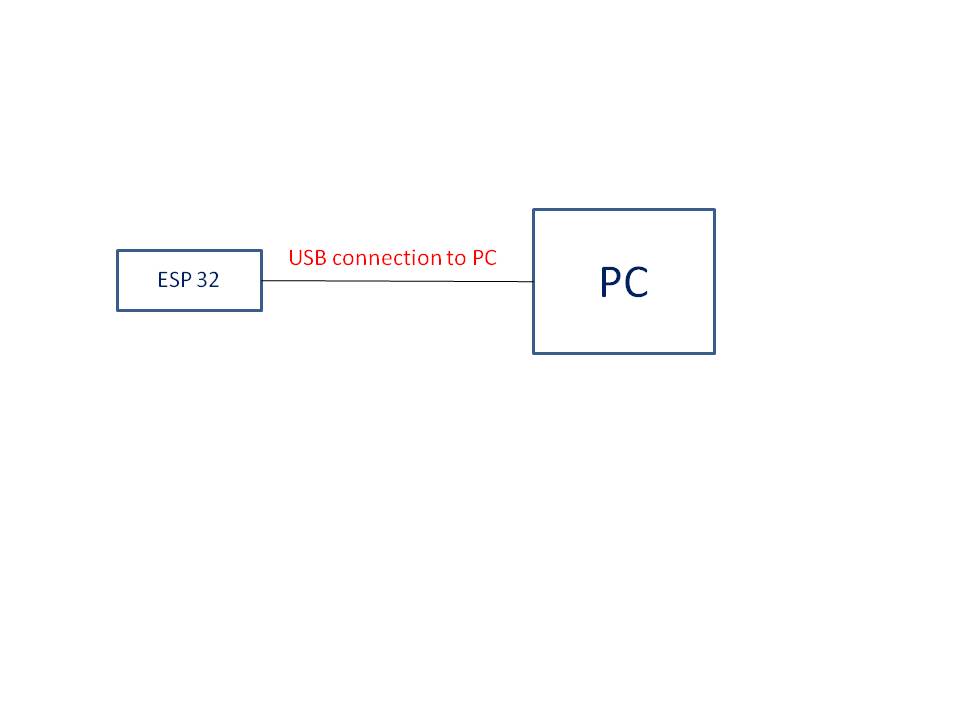
Comments
Only logged in users can leave comments