Heliograde
Light Sensitive Sampling Process Microcontroller Software and Hardware Application (MSHA) Project.
Components and supplies
14
2x15 Pin Headers Socket 2.54mm Male & Female 4 Pair Connector
10
5 mm LED: Green
1
Ceramic Capacitor 1.2 nF
1
Ceramic Capacitor 10 nF
1
Photo resistor
1
Tactile Switch, Top Actuated
1
Male/Male Jumper Wires
1
USB-A to B Cable
1
Arduino UNO
10
Resistor 220 ohm
1
555 Timers
2
Resistor 100k ohm
1
9V battery (generic)
1
Through Hole Resistor, 680 ohm
Tools and machines
1
Soldering iron (generic)
1
Solder Wire, Lead Free
Project description
Code
Helliograde.ino
arduino
1int statesMaxLength = 600;
2
3class Timer555
4{
5public:
6	int   pin;
7	Timer555(int pin)
8	{
9		this->pin = pin;
10	}
11	int getCurrentState()
12	{
13		return   digitalRead(this->pin);
14	}
15};
16
17class LiteScopeBoard
18{
19private:
20	unsigned   long int millisPerHour = 3600000;
21	float T = 834.00;
22	float T_59 = this->T   * 59.00 / 100.00;
23	float T_41 = this->T * 41.00 / 100.00;
24	float T_ratio   = this->T_59 / this->T_41;
25	float float_stm = float(statesMaxLength);
26	float   boardClock = 16000.00;
27	float clock_ratio = this->boardClock / this->float_stm;
28	float   num_of_ones = 0.00;
29	float num_of_zeros = 0.00;
30	float one_cycle = 1.00;
31	int   ledNum = 10;
32	int ledPins[10];
33	int timerPin;
34	int switchModePin;
35	int   getTimerPin(Timer555 t)
36	{
37		return t.pin;
38	}
39
40public:
41	unsigned   long int counter = 0;
42	float cycles = 0.00;
43	int Helliogrades = 0;
44	LiteScopeBoard(Timer555   timer, int switchModePin, int l0, int l1, int l2, int l3, int l4, int l5, int l6,   int l7, int l8, int l9)
45	{
46		this->timerPin = this->getTimerPin(timer);
47		this->switchModePin   = switchModePin;
48		for (int i = 0; i < this->ledNum; i++)
49		{
50			switch   (i)
51			{
52			case 0:
53				this->ledPins[i] = l0;
54				break;
55			case   1:
56				this->ledPins[i] = l1;
57				break;
58			case 2:
59				this->ledPins[i]   = l2;
60				break;
61			case 3:
62				this->ledPins[i] = l3;
63				break;
64			case   4:
65				this->ledPins[i] = l4;
66				break;
67			case 5:
68				this->ledPins[i]   = l5;
69				break;
70			case 6:
71				this->ledPins[i] = l6;
72				break;
73			case   7:
74				this->ledPins[i] = l7;
75				break;
76			case 8:
77				this->ledPins[i]   = l8;
78				break;
79			case 9:
80				this->ledPins[i] = l9;
81				break;
82			}
83		}
84	}
85	void   timerPinSetup()
86	{
87		pinMode(this->timerPin, INPUT);
88	}
89	void switchModePinSetup()
90	{
91		pinMode(this->switchModePin,   INPUT);
92	}
93	void ledPinsSetup()
94	{
95		for (int i = 0; i < this->ledNum;   i++)
96		{
97			pinMode(this->ledPins[i], OUTPUT);
98		}
99	}
100	void   initialize()
101	{
102		delay(1000);
103		this->allLedsON();
104		delay(1000);
105		this->allLedsOFF();
106		if   (Serial)
107		{
108			Serial.print("Timer Pin: ");
109			Serial.println(this->timerPin);
110			Serial.print("Switch   Mode Pin: ");
111			Serial.println(this->switchModePin);
112			Serial.println();
113		}
114		//   sync / snap board to a timer's first and nearest ON state (logical 1)
115		while   (digitalRead(this->timerPin) == 0)
116		{
117			;
118		}
119	}
120	int   getMode()
121	{
122		return digitalRead(this->switchModePin);
123	}
124	void   count()
125	{
126		this->counter++;
127	}
128	void addCycles(Timer555 &t)
129	{
130		int   state, del;
131		float cyclesRatio, runCycles;
132		for (int j = 0; j < 2; j++)
133		{
134			for   (int i = 0; i < statesMaxLength; i++)
135			{
136				state = t.getCurrentState();
137				switch   (state)
138				{
139				case 0:
140					this->num_of_zeros++;
141					break;
142				case   1:
143					this->num_of_ones++;
144					break;
145				}
146			}
147		}
148		if   (this->num_of_zeros != 0 && this->num_of_ones != 0)
149		{
150			cyclesRatio   = float(this->num_of_ones) / float(this->num_of_zeros);
151			cyclesRatio /=   this->T_ratio;
152			runCycles = this->one_cycle / cyclesRatio;
153			runCycles   *= this->clock_ratio;
154			this->cycles += runCycles;
155		}
156		this->num_of_zeros   = 0.00;
157		this->num_of_ones = 0.00;
158		del = int(this->T);
159		delayMicroseconds(del);
160	}
161	void   ledON(int i)
162	{
163		digitalWrite(this->ledPins[i], HIGH);
164	}
165	void   ledOFF(int i)
166	{
167		digitalWrite(this->ledPins[i], LOW);
168	}
169	void   allLedsON()
170	{
171		for (int i = 0; i < this->ledNum; i++)
172		{
173			this->ledON(i);
174		}
175	}
176	void   allLedsOFF()
177	{
178		for (int i = 0; i < this->ledNum; i++)
179		{
180			this->ledOFF(i);
181		}
182	}
183	void   showStatus()
184	{
185		if (this->getMode() == 1)
186		{
187			if (Serial)
188			{
189				Serial.print("Board   Loops counted: ");
190				Serial.print(this->counter);
191				Serial.println();
192				Serial.print("Timer   Cycles counted: ");
193				Serial.print(this->cycles);
194				Serial.println();
195				Serial.println();
196			}
197		}
198	}
199	void   addHelliograde()
200	{
201		float float_hr;
202		int int_hr;
203		float_hr   = this->cycles / float(this->millisPerHour);
204		int_hr = int(float_hr);
205		if   (this->Helliogrades < int_hr)
206		{
207			if (int_hr >= 1 && int_hr <= 10)
208			{
209				this->Helliogrades++;
210			}
211		}
212	}
213	void   showHelliogrades()
214	{
215		if (this->Helliogrades > 0)
216		{
217			for   (int i = 0; i < this->Helliogrades; i++)
218			{
219				this->ledON(i);
220			}
221		}
222	}
223};
224
225Timer555   timer(13);
226LiteScopeBoard board(timer, 12, 2, 3, 4, 5, 6, 7, 8, 9, 10, 11);
227
228void   setup()
229{
230	// **  THE FOLLOWING CODE WORKS PERFECT ON ARDUINO.  **
231	//   **  SO, WE CAN INITIALIZE LOOP, AFTER SYNCING
232	//     BOARD TO TIMER AT THE   VERY FIRST TIMER'S
233	//     ON STATE MOMENT
234	/*Serial.begin(9600);
235	pinMode(2,   INPUT);
236	delay(1000);
237	while(digitalRead(2) == 0) {
238	;
239	}
240	Serial.println("ok");*/
241	Serial.begin(115200);
242	board.timerPinSetup();
243	board.switchModePinSetup();
244	board.ledPinsSetup();
245	board.initialize();
246}
247
248void   loop()
249{
250	board.count();
251	board.addCycles(timer);
252	board.addHelliograde();
253	board.showHelliogrades();
254	board.showStatus();
255}
256
Helliograde.ino
arduino
1int statesMaxLength = 600;
2
3class Timer555
4{
5public:
6	int  pin;
7	Timer555(int pin)
8	{
9		this->pin = pin;
10	}
11	int getCurrentState()
12	{
13		return  digitalRead(this->pin);
14	}
15};
16
17class LiteScopeBoard
18{
19private:
20	unsigned  long int millisPerHour = 3600000;
21	float T = 834.00;
22	float T_59 = this->T  * 59.00 / 100.00;
23	float T_41 = this->T * 41.00 / 100.00;
24	float T_ratio  = this->T_59 / this->T_41;
25	float float_stm = float(statesMaxLength);
26	float  boardClock = 16000.00;
27	float clock_ratio = this->boardClock / this->float_stm;
28	float  num_of_ones = 0.00;
29	float num_of_zeros = 0.00;
30	float one_cycle = 1.00;
31	int  ledNum = 10;
32	int ledPins[10];
33	int timerPin;
34	int switchModePin;
35	int  getTimerPin(Timer555 t)
36	{
37		return t.pin;
38	}
39
40public:
41	unsigned  long int counter = 0;
42	float cycles = 0.00;
43	int Helliogrades = 0;
44	LiteScopeBoard(Timer555  timer, int switchModePin, int l0, int l1, int l2, int l3, int l4, int l5, int l6,  int l7, int l8, int l9)
45	{
46		this->timerPin = this->getTimerPin(timer);
47		this->switchModePin  = switchModePin;
48		for (int i = 0; i < this->ledNum; i++)
49		{
50			switch  (i)
51			{
52			case 0:
53				this->ledPins[i] = l0;
54				break;
55			case  1:
56				this->ledPins[i] = l1;
57				break;
58			case 2:
59				this->ledPins[i]  = l2;
60				break;
61			case 3:
62				this->ledPins[i] = l3;
63				break;
64			case  4:
65				this->ledPins[i] = l4;
66				break;
67			case 5:
68				this->ledPins[i]  = l5;
69				break;
70			case 6:
71				this->ledPins[i] = l6;
72				break;
73			case  7:
74				this->ledPins[i] = l7;
75				break;
76			case 8:
77				this->ledPins[i]  = l8;
78				break;
79			case 9:
80				this->ledPins[i] = l9;
81				break;
82			}
83		}
84	}
85	void  timerPinSetup()
86	{
87		pinMode(this->timerPin, INPUT);
88	}
89	void switchModePinSetup()
90	{
91		pinMode(this->switchModePin,  INPUT);
92	}
93	void ledPinsSetup()
94	{
95		for (int i = 0; i < this->ledNum;  i++)
96		{
97			pinMode(this->ledPins[i], OUTPUT);
98		}
99	}
100	void  initialize()
101	{
102		delay(1000);
103		this->allLedsON();
104		delay(1000);
105		this->allLedsOFF();
106		if  (Serial)
107		{
108			Serial.print("Timer Pin: ");
109			Serial.println(this->timerPin);
110			Serial.print("Switch  Mode Pin: ");
111			Serial.println(this->switchModePin);
112			Serial.println();
113		}
114		//  sync / snap board to a timer's first and nearest ON state (logical 1)
115		while  (digitalRead(this->timerPin) == 0)
116		{
117			;
118		}
119	}
120	int  getMode()
121	{
122		return digitalRead(this->switchModePin);
123	}
124	void  count()
125	{
126		this->counter++;
127	}
128	void addCycles(Timer555 &t)
129	{
130		int  state, del;
131		float cyclesRatio, runCycles;
132		for (int j = 0; j < 2; j++)
133		{
134			for  (int i = 0; i < statesMaxLength; i++)
135			{
136				state = t.getCurrentState();
137				switch  (state)
138				{
139				case 0:
140					this->num_of_zeros++;
141					break;
142				case  1:
143					this->num_of_ones++;
144					break;
145				}
146			}
147		}
148		if  (this->num_of_zeros != 0 && this->num_of_ones != 0)
149		{
150			cyclesRatio  = float(this->num_of_ones) / float(this->num_of_zeros);
151			cyclesRatio /=  this->T_ratio;
152			runCycles = this->one_cycle / cyclesRatio;
153			runCycles  *= this->clock_ratio;
154			this->cycles += runCycles;
155		}
156		this->num_of_zeros  = 0.00;
157		this->num_of_ones = 0.00;
158		del = int(this->T);
159		delayMicroseconds(del);
160	}
161	void  ledON(int i)
162	{
163		digitalWrite(this->ledPins[i], HIGH);
164	}
165	void  ledOFF(int i)
166	{
167		digitalWrite(this->ledPins[i], LOW);
168	}
169	void  allLedsON()
170	{
171		for (int i = 0; i < this->ledNum; i++)
172		{
173			this->ledON(i);
174		}
175	}
176	void  allLedsOFF()
177	{
178		for (int i = 0; i < this->ledNum; i++)
179		{
180			this->ledOFF(i);
181		}
182	}
183	void  showStatus()
184	{
185		if (this->getMode() == 1)
186		{
187			if (Serial)
188			{
189				Serial.print("Board  Loops counted: ");
190				Serial.print(this->counter);
191				Serial.println();
192				Serial.print("Timer  Cycles counted: ");
193				Serial.print(this->cycles);
194				Serial.println();
195				Serial.println();
196			}
197		}
198	}
199	void  addHelliograde()
200	{
201		float float_hr;
202		int int_hr;
203		float_hr  = this->cycles / float(this->millisPerHour);
204		int_hr = int(float_hr);
205		if  (this->Helliogrades < int_hr)
206		{
207			if (int_hr >= 1 && int_hr <= 10)
208			{
209				this->Helliogrades++;
210			}
211		}
212	}
213	void  showHelliogrades()
214	{
215		if (this->Helliogrades > 0)
216		{
217			for  (int i = 0; i < this->Helliogrades; i++)
218			{
219				this->ledON(i);
220			}
221		}
222	}
223};
224
225Timer555  timer(13);
226LiteScopeBoard board(timer, 12, 2, 3, 4, 5, 6, 7, 8, 9, 10, 11);
227
228void  setup()
229{
230	// **  THE FOLLOWING CODE WORKS PERFECT ON ARDUINO.  **
231	//  **  SO, WE CAN INITIALIZE LOOP, AFTER SYNCING
232	//     BOARD TO TIMER AT THE  VERY FIRST TIMER'S
233	//     ON STATE MOMENT
234	/*Serial.begin(9600);
235	pinMode(2,  INPUT);
236	delay(1000);
237	while(digitalRead(2) == 0) {
238	;
239	}
240	Serial.println("ok");*/
241	Serial.begin(115200);
242	board.timerPinSetup();
243	board.switchModePinSetup();
244	board.ledPinsSetup();
245	board.initialize();
246}
247
248void  loop()
249{
250	board.count();
251	board.addCycles(timer);
252	board.addHelliograde();
253	board.showHelliogrades();
254	board.showStatus();
255}
256
Downloadable files
Helliograde Schematics
Helliograde Schematics
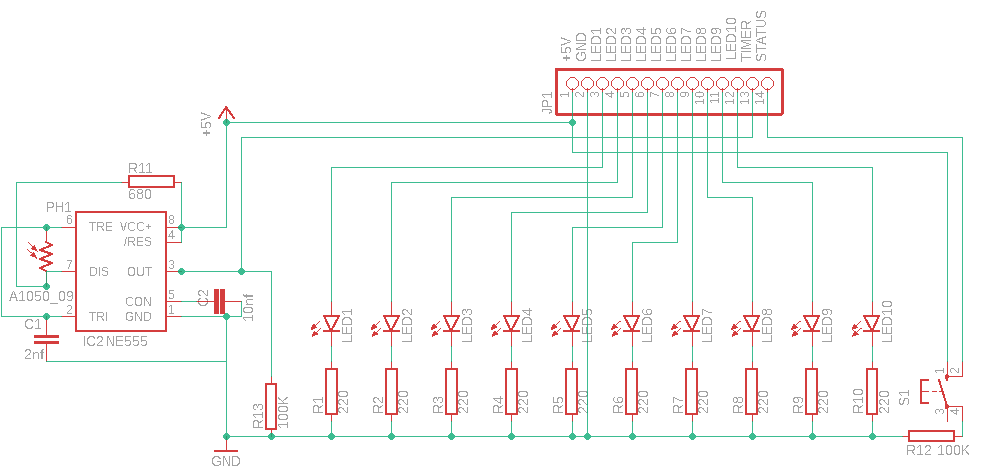
Helliograde Schematics
Helliograde Schematics
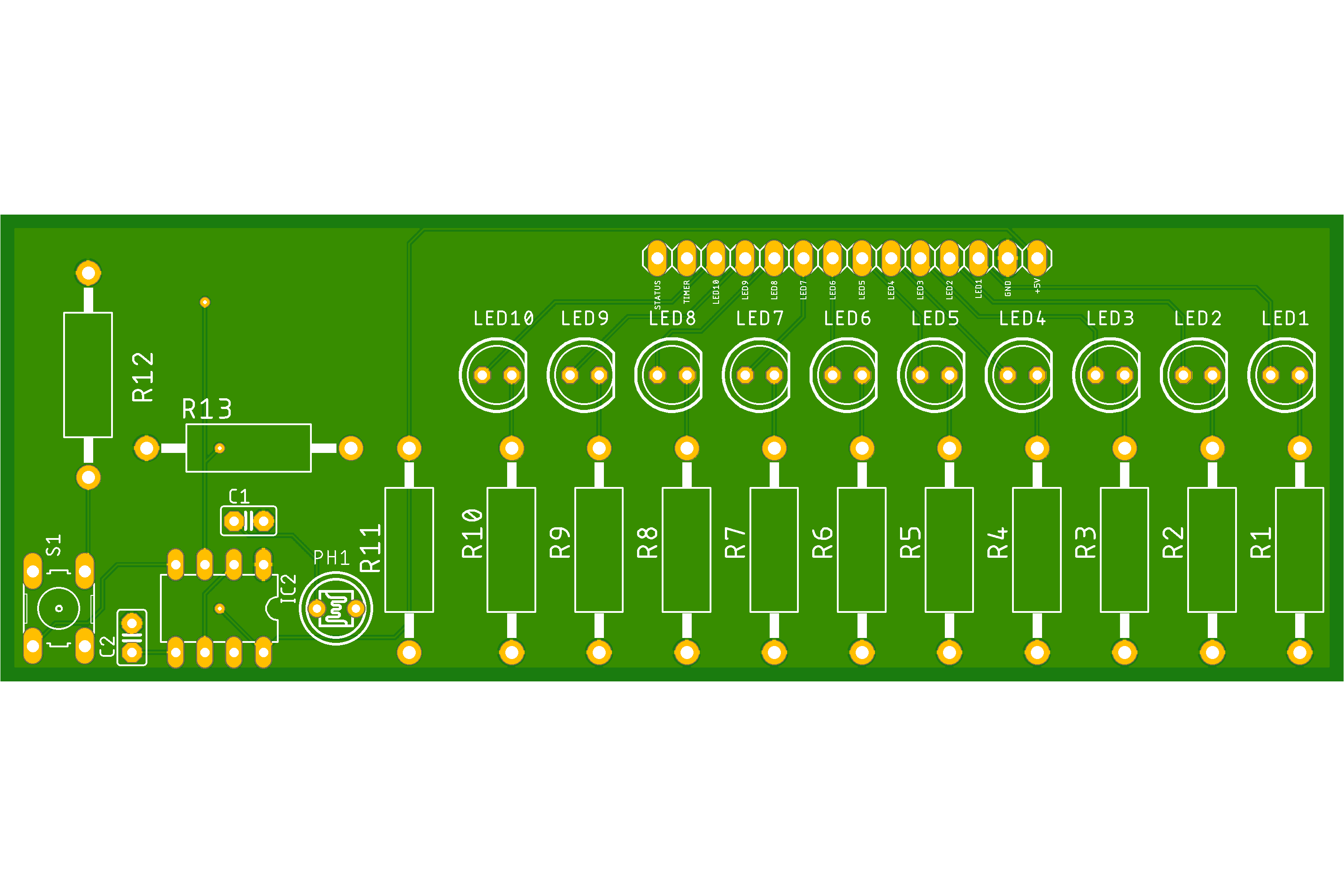
Helliograde PCB
Helliograde PCB
Documentation
Helliograde CAM
Helliograde CAM
Helliograde CAM
Helliograde CAM
Comments
Only logged in users can leave comments