Motion Activated LED Strip using LDR and PIR
A motion-activated LED strip system that turns on lights in the dark using input from both a PIR motion sensor and an LDR..
Devices & Components
1
Arduino Nano
1
10k ohm resistors
1
HC-SR501
1
12V LED Strip
1
LDR Resistor
1
330 ohm resistors
1
Mosfet IRFZ44N
1
12v adapter
Hardware & Tools
1
Soldering kit
1
Double sided tape
Software & Tools

Arduino IDE
Project description
Code
Code
Upload and enjoy!!!
1const int PIR_PIN = 12;    // PIR sensor pin
2const int LED_PIN = 8;     // LED pin
3const int LDR_PIN = A0;    // LDR sensor pin
4
5// Timing constants
6const int TIMEOUT = 5000;       // 5 seconds timeout for walking to bathroom
7const int CHECK_TIME = 4000;    // Check at 4 seconds
8const int DEBOUNCE_TIME = 200;  // Time between debounce readings
9const int DEBOUNCE_READS = 3;   // Number of readings for debounce
10const int LDR_CHECK_INTERVAL = 1000; // Check light level every 1 second
11
12// LDR constants
13const int numReadings = 3;      // Moving average window size for LDR (reduced from 5)
14const int hysteresis = 20;      // Hysteresis to prevent flickering
15
16// Debugging
17const bool DEBUG = true;        // Set to true for serial debugging, false for normal operation
18
19const int LDR_FAST_INTERVAL = 1000;   // Check light every 1 second when dark or changing
20const int LDR_SLOW_INTERVAL = 10000;  // Check light every 10 seconds when consistently bright
21const int LIGHT_HISTORY_THRESHOLD = 5; // Number of consecutive light readings to trigger slow mode
22
23// Add these new state variables with other state variables
24int consecutiveLightReadings = 0;
25int currentLdrInterval = LDR_FAST_INTERVAL;
26
27// State variables for PIR
28bool motionDetected = false;
29unsigned long motionStartTime = 0;
30unsigned long lastSerialTime = 0;
31unsigned long lastWatchdogCheck = 0;
32
33// State variables for LDR
34int ldrReadings[numReadings];   // Array to store LDR readings
35int readIndex = 0;
36int ldrTotal = 0;
37int ldrAverage = 0;
38int ldrThreshold = 0;           // Will be set during calibration
39bool isDark = false;
40unsigned long lastLdrCheck = 0;
41
42// System state
43bool ledsEnabled = false;       // Combined state from both sensors
44
45unsigned long ledOnTime = 0;
46const int LDR_LOCKOUT_PERIOD = 10000;  // 10 seconds lockout after LEDs turn on
47
48void setup() {
49  pinMode(PIR_PIN, INPUT);
50  pinMode(LED_PIN, OUTPUT);
51  pinMode(LDR_PIN, INPUT);
52  digitalWrite(LED_PIN, LOW);   // Ensure OFF state on startup
53
54  if (DEBUG) {
55    Serial.begin(9600);
56    Serial.println("⚡ Combined PIR Motion & LDR Light Sensor System Ready...");
57  }
58
59  // Initialize LDR readings array
60  for (int i = 0; i < numReadings; i++) {
61    ldrReadings[i] = analogRead(LDR_PIN);
62    ldrTotal += ldrReadings[i];
63  }
64
65  // Calibrate LDR threshold
66  calibrateLDR();
67
68  // Allow PIR sensor to stabilize on startup
69  if (DEBUG) Serial.println("PIR sensor stabilizing...");
70  delay(3000);
71  if (DEBUG) Serial.println("System ready!");
72}
73
74// LDR calibration function
75void calibrateLDR() {
76  // if (DEBUG) Serial.println("Calibrating LDR sensor...");
77
78  // int sum = 0;
79  // for (int i = 0; i < 10; i++) {  // Take 10 readings at startup
80  //   sum += analogRead(LDR_PIN);
81  //   delay(50);
82  // }
83
84  // ldrThreshold = sum / 10;  // Set the threshold dynamically
85
86  // if (DEBUG) {
87  //   Serial.print("Calibrated LDR Threshold: ");
88  //   Serial.println(ldrThreshold);
89  //   Serial.println("IMPORTANT: After testing, replace the calibrateLDR() function with:");
90  //   Serial.println("void calibrateLDR() {");
91  //   Serial.print("  ldrThreshold = ");
92  //   Serial.print(ldrThreshold);
93  //   Serial.println("; // Hardcoded value based on testing");
94  //   Serial.println("}");
95  // }
96
97  ldrThreshold = 30;
98
99  // Initial darkness check
100  checkLight();
101}
102
103// Helper function for debounced PIR reading
104bool debounceMotion() {
105  int motionCount = 0;
106
107  // Take multiple readings with short pauses
108  for (int i = 0; i < DEBOUNCE_READS; i++) {
109    if (digitalRead(PIR_PIN) == HIGH) {
110      motionCount++;
111    }
112    delay(DEBOUNCE_TIME / DEBOUNCE_READS);
113  }
114
115  // Return true if majority of readings show motion
116  return (motionCount > DEBOUNCE_READS / 2);
117}
118
119// Check motion sensor and update motion state
120void checkMotion() {
121  unsigned long currentMillis = millis();
122
123  // Handle millis() overflow
124  // millis() will eventually overflow (~50 days), rolling back to 0. If that happens, currentMillis will suddenly be less than your stored motionStartTime. This resets your timer to avoid weird behavior.
125  if (currentMillis < motionStartTime) {
126    motionStartTime = currentMillis;
127  }
128
129  // Only check motion when needed to reduce processor load
130  bool motionNow = false;
131
132  if (!motionDetected ||
133      (motionDetected && (currentMillis - motionStartTime >= CHECK_TIME) &&
134                         (currentMillis - motionStartTime < TIMEOUT))) {
135    // Only debounce when we need to check for motion
136    motionNow = debounceMotion();
137  }
138
139  // State machine
140  if (!motionDetected && motionNow) {
141    // New motion detected
142    motionDetected = true;
143    motionStartTime = currentMillis;
144
145    if (DEBUG && (currentMillis - lastSerialTime > 1000)) {
146      Serial.println("✅ Motion detected!");
147      lastSerialTime = currentMillis;
148    }
149  }
150  else if (motionDetected) {
151    // Already in a motion cycle
152    if (currentMillis - motionStartTime >= CHECK_TIME &&
153        currentMillis - motionStartTime < TIMEOUT && motionNow) {
154      // Motion still present at check time - extend timer
155      motionStartTime = currentMillis;
156
157      if (DEBUG && (currentMillis - lastSerialTime > 1000)) {
158        Serial.println("🔁 Motion still detected, extending time...");
159        lastSerialTime = currentMillis;
160      }
161    }
162    else if (currentMillis - motionStartTime >= TIMEOUT) {
163      // Timeout reached
164      motionDetected = false;
165
166      if (DEBUG && (currentMillis - lastSerialTime > 1000)) {
167        Serial.println("🚨 No motion detected for full cycle.");
168        lastSerialTime = currentMillis;
169      }
170    }
171  }
172}
173
174// Check light sensor and update darkness state
175void checkLight() {
176  // Remove oldest reading
177  ldrTotal -= ldrReadings[readIndex];
178
179  // Read new value and update moving average
180  ldrReadings[readIndex] = analogRead(LDR_PIN);
181  ldrTotal += ldrReadings[readIndex];
182  readIndex = (readIndex + 1) % numReadings;
183  ldrAverage = ldrTotal / numReadings;  // Compute moving average
184
185  if (DEBUG) {
186    Serial.print("LDR Average: ");
187    Serial.print(ldrAverage);
188    Serial.print(" (Threshold: ");
189    Serial.print(ldrThreshold);
190    Serial.println(")");
191  }
192
193  // Update darkness state with hysteresis
194  if (!isDark && ldrAverage <= ldrThreshold - hysteresis) {
195    isDark = true;
196    if (DEBUG) Serial.println("🌙 Dark environment detected");
197  }
198  else if (isDark && ldrAverage >= ldrThreshold + hysteresis) {
199    isDark = false;
200    if (DEBUG) Serial.println("☀️ Light environment detected");
201  }
202}
203
204// // Update LED state based on sensor inputs
205// void updateLEDs() {
206//   // Since we're only calling this when it's dark, just check motion
207//   bool newLedState = motionDetected;
208
209//   // Only update physical LED if state has changed
210//   if (ledsEnabled != newLedState) {
211//     ledsEnabled = newLedState;
212//     digitalWrite(LED_PIN, ledsEnabled ? HIGH : LOW);
213
214//     if (DEBUG) {
215//       if (ledsEnabled) {
216//         Serial.println("💡 LEDs ON - Dark + Motion");
217//       } else {
218//         Serial.println("💡 LEDs OFF - No motion");
219//       }
220//     }
221//   }
222// }
223
224// Watchdog function to detect inconsistent states
225void runWatchdog() {
226  unsigned long currentMillis = millis();
227
228  // Watchdog - check for inconsistent states every 30 seconds
229  if (currentMillis - lastWatchdogCheck > 30000) {
230    lastWatchdogCheck = currentMillis;
231
232    // Fix inconsistent LED states
233    if (ledsEnabled != digitalRead(LED_PIN)) {
234      digitalWrite(LED_PIN, ledsEnabled ? HIGH : LOW);
235
236      if (DEBUG) {
237        Serial.println("⚠️ Watchdog reset - inconsistent LED state detected");
238      }
239    }
240  }
241}
242
243// The issue is in the loop function and how we're managing the state variables.
244// Here's the fixed loop() function:
245
246void loop() {
247  unsigned long currentMillis = millis();
248
249  // Check if we're in the lockout period after turning on LEDs
250  bool inLockoutPeriod = ledsEnabled && (currentMillis - ledOnTime < LDR_LOCKOUT_PERIOD);
251
252  // Only check light level when not in lockout period and enough time has passed since the last check.
253  if (!inLockoutPeriod && currentMillis - lastLdrCheck >= currentLdrInterval) {
254    lastLdrCheck = currentMillis;
255
256    // Check light before doing anything else
257    bool previousDarkState = isDark;
258    checkLight();
259
260    // Adaptive light checking interval logic
261    if (!isDark) {
262      // Environment is light, increment counter
263      consecutiveLightReadings++;
264      if (consecutiveLightReadings >= LIGHT_HISTORY_THRESHOLD && currentLdrInterval == LDR_FAST_INTERVAL) {
265        // Switch to slow checking after consistent light readings
266        currentLdrInterval = LDR_SLOW_INTERVAL;
267        if (DEBUG) Serial.println("☀️ Consistently bright environment detected, reducing LDR check frequency");
268      }
269
270      // Ensure LEDs are off when it's light (do this immediately after light check)
271      if (ledsEnabled) {
272        ledsEnabled = false;
273        digitalWrite(LED_PIN, LOW);
274        if (DEBUG) Serial.println("💡 LEDs OFF - Room is bright");
275      }
276    } else {
277      // Environment is dark, reset counter and ensure fast checking
278      consecutiveLightReadings = 0;
279      if (currentLdrInterval == LDR_SLOW_INTERVAL) {
280        currentLdrInterval = LDR_FAST_INTERVAL;
281        if (DEBUG) Serial.println("🌙 Dark environment detected, increasing LDR check frequency");
282      }
283    }
284  }
285
286  // Only proceed with motion detection and LED control if it's dark
287  if (isDark) {
288    checkMotion();
289
290    // Update LED state based on motion (only if dark)
291    bool newLedState = motionDetected;
292    if (ledsEnabled != newLedState) {
293      ledsEnabled = newLedState;
294      digitalWrite(LED_PIN, ledsEnabled ? HIGH : LOW);
295
296      // Record time when LEDs turn on
297      if (ledsEnabled) {
298        ledOnTime = currentMillis;
299      }
300
301      if (DEBUG) {
302        if (ledsEnabled) {
303          Serial.println("💡 LEDs ON - Dark + Motion");
304        } else {
305          Serial.println("💡 LEDs OFF - No motion");
306        }
307      }
308    }
309  }
310
311  // Run watchdog regardless of light conditions
312  runWatchdog();
313
314  // Short delay to reduce CPU usage
315  delay(300);
316}
317// The updateLEDs() function is now integrated directly into the loop
318// to ensure proper state management
319/*
320 * CALIBRATION INSTRUCTIONS:
321 *
322 * 1. Run this code with DEBUG set to true
323 * 2. Note the LDR Threshold value after calibration
324 * 3. After testing with your actual setup in its final position,
325 *    replace the calibrateLDR() function with the hardcoded version:
326 *
327 *    void calibrateLDR() {
328 *      ldrThreshold = 450; // Replace 450 with your calibrated value
329 *    }
330 *
331 * 4. Comment out the dynamic calibration code and uncomment the
332 *    hardcoded version below:
333 */
334
335/* UNCOMMENT THIS SECTION AFTER CALIBRATION
336void calibrateLDR() {
337  // Hardcoded threshold based on testing in the final installation location
338  ldrThreshold = 450; // Replace with your calibrated value
339
340  if (DEBUG) {
341    Serial.print("Using hardcoded LDR Threshold: ");
342    Serial.println(ldrThreshold);
343  }
344
345  // Initial darkness check
346  checkLight();
347}
348*/
Documentation
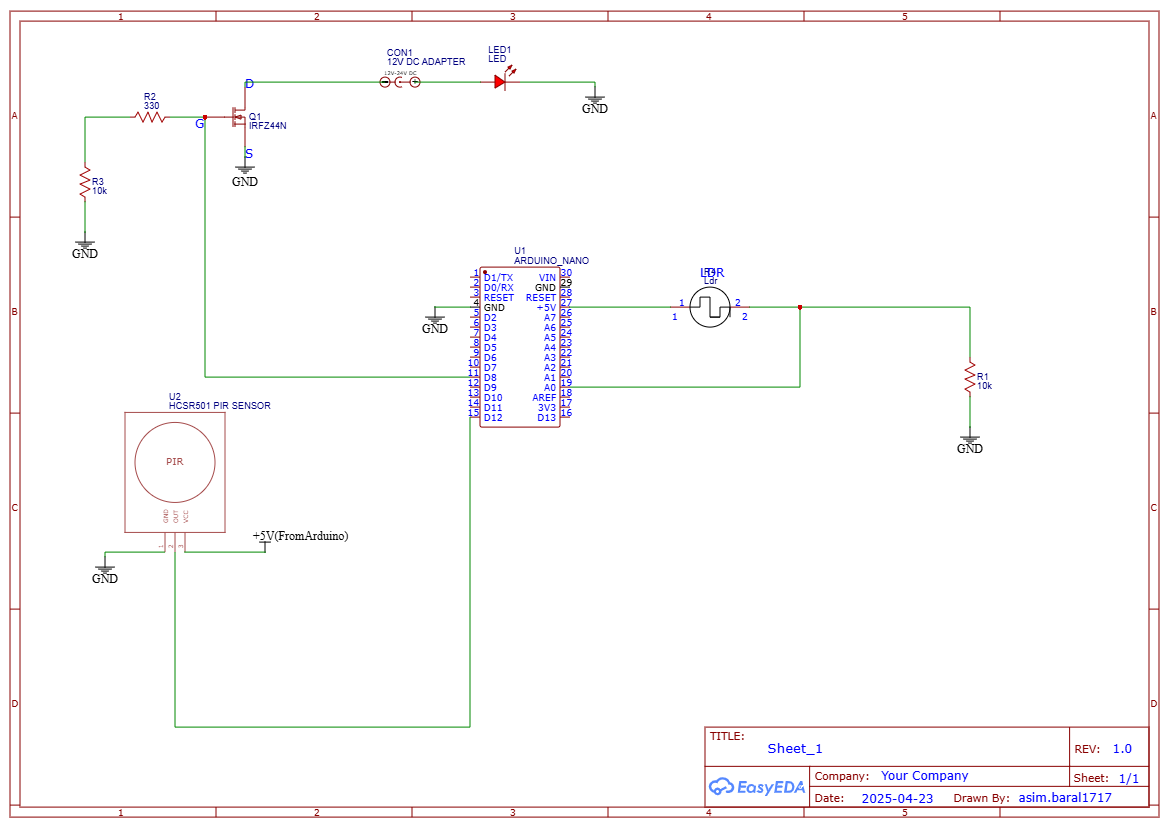
Project Schematic
LED is used instead of LED Strip for simplicity.
Schematic_LED-Strip_2025-04-23.png
Comments
Only logged in users can leave comments