Devices & Components
1
RGB Diffused Common Cathode
1
Pushbutton switch 12mm
1
Resistor 1k ohm
1
DigiSpark
Hardware & Tools
1
Soldering iron (generic)
Software & Tools
1
Drivers
Project description
Code
time.h
c_cpp
This is the library needed to use the time functions
1/*
2  time.h - low level time and date functions
3*/
4
5/*
6  July 3 2011 - fixed elapsedSecsThisWeek macro (thanks Vincent Valdy for this)
7              - fixed  daysToTime_t macro (thanks maniacbug)
8*/
9
10#ifndef  _Time_h
11#ifdef __cplusplus
12#define _Time_h
13
14#include <inttypes.h>
15#ifndef  __AVR__
16#include <sys/types.h> // for __time_t_defined, but avr libc lacks sys/types.h
17#endif
18
19
20#if  !defined(__time_t_defined) // avoid conflict with newlib or other posix libc
21typedef  unsigned long time_t;
22#endif
23
24
25// This ugly hack allows us to define  C++ overloaded functions, when included
26// from within an extern "C", as newlib's  sys/stat.h does.  Actually it is
27// intended to include "time.h" from the C  library (on ARM, but AVR does not
28// have that file at all).  On Mac and Windows,  the compiler will find this
29// "Time.h" instead of the C library "time.h",  so we may cause other weird
30// and unpredictable effects by conflicting with  the C library header "time.h",
31// but at least this hack lets us define C++  functions as intended.  Hopefully
32// nothing too terrible will result from overriding  the C library header?!
33extern "C++" {
34typedef enum {timeNotSet, timeNeedsSync,  timeSet
35}  timeStatus_t ;
36
37typedef enum {
38    dowInvalid, dowSunday,  dowMonday, dowTuesday, dowWednesday, dowThursday, dowFriday, dowSaturday
39} timeDayOfWeek_t;
40
41typedef  enum {
42    tmSecond, tmMinute, tmHour, tmWday, tmDay,tmMonth, tmYear, tmNbrFields
43}  tmByteFields;
44
45typedef struct  {
46  uint8_t Second;
47  uint8_t  Minute;
48  uint8_t Hour;
49  uint8_t Wday;   // day of week, sunday is day  1
50  uint8_t Day;
51  uint8_t Month;
52  uint8_t Year;   // offset from 1970;
53} 	tmElements_t, TimeElements, *tmElementsPtr_t;
54
55//convenience macros  to convert to and from tm years
56#define  tmYearToCalendar(Y) ((Y) + 1970)  //  full four digit year
57#define  CalendarYrToTm(Y)   ((Y) - 1970)
58#define  tmYearToY2k(Y)      ((Y) - 30)    // offset is from 2000
59#define  y2kYearToTm(Y)      ((Y)  + 30)
60
61typedef time_t(*getExternalTime)();
62//typedef void  (*setExternalTime)(const  time_t); // not used in this version
63
64
65/*==============================================================================*/
66/*  Useful Constants */
67#define SECS_PER_MIN  ((time_t)(60UL))
68#define SECS_PER_HOUR  ((time_t)(3600UL))
69#define SECS_PER_DAY  ((time_t)(SECS_PER_HOUR * 24UL))
70#define  DAYS_PER_WEEK ((time_t)(7UL))
71#define SECS_PER_WEEK ((time_t)(SECS_PER_DAY *  DAYS_PER_WEEK))
72#define SECS_PER_YEAR ((time_t)(SECS_PER_WEEK * 52UL))
73#define  SECS_YR_2000  ((time_t)(946684800UL)) // the time at the start of y2k
74
75/*  Useful Macros for getting elapsed time */
76#define numberOfSeconds(_time_) (_time_  % SECS_PER_MIN)
77#define numberOfMinutes(_time_) ((_time_ / SECS_PER_MIN) %  SECS_PER_MIN)
78#define numberOfHours(_time_) (( _time_% SECS_PER_DAY) / SECS_PER_HOUR)
79#define  dayOfWeek(_time_)  ((( _time_ / SECS_PER_DAY + 4)  % DAYS_PER_WEEK)+1) // 1 = Sunday
80#define  elapsedDays(_time_) ( _time_ / SECS_PER_DAY)  // this is number of days since Jan  1 1970
81#define elapsedSecsToday(_time_)  (_time_ % SECS_PER_DAY)   // the number  of seconds since last midnight
82// The following macros are used in calculating  alarms and assume the clock is set to a date later than Jan 1 1971
83// Always  set the correct time before settting alarms
84#define previousMidnight(_time_)  (( _time_ / SECS_PER_DAY) * SECS_PER_DAY)  // time at the start of the given day
85#define  nextMidnight(_time_) ( previousMidnight(_time_)  + SECS_PER_DAY )   // time at the  end of the given day
86#define elapsedSecsThisWeek(_time_)  (elapsedSecsToday(_time_)  +  ((dayOfWeek(_time_)-1) * SECS_PER_DAY) )   // note that week starts on day 1
87#define  previousSunday(_time_)  (_time_ - elapsedSecsThisWeek(_time_))      // time at the  start of the week for the given time
88#define nextSunday(_time_) ( previousSunday(_time_)+SECS_PER_WEEK)          // time at the end of the week for the given time
89
90
91/* Useful  Macros for converting elapsed time to a time_t */
92#define minutesToTime_t ((M))  ( (M) * SECS_PER_MIN)
93#define hoursToTime_t   ((H)) ( (H) * SECS_PER_HOUR)
94#define daysToTime_t    ((D)) ( (D) * SECS_PER_DAY) // fixed on Jul 22 2011
95#define  weeksToTime_t   ((W)) ( (W) * SECS_PER_WEEK)
96
97/*============================================================================*/
98/*  time and date functions   */
99int     hour();            // the hour now
100int     hour(time_t t);    // the hour for the given time
101int     hourFormat12();    // the hour now in 12 hour format
102int     hourFormat12(time_t t); // the  hour for the given time in 12 hour format
103uint8_t isAM();            // returns  true if time now is AM
104uint8_t isAM(time_t t);    // returns true the given time  is AM
105uint8_t isPM();            // returns true if time now is PM
106uint8_t  isPM(time_t t);    // returns true the given time is PM
107int     minute();          //  the minute now
108int     minute(time_t t);  // the minute for the given time
109int     second();          // the second now
110int     second(time_t t);  // the  second for the given time
111int     day();             // the day now
112int     day(time_t  t);     // the day for the given time
113int     weekday();         // the weekday  now (Sunday is day 1)
114int     weekday(time_t t); // the weekday for the given  time
115int     month();           // the month now  (Jan is month 1)
116int     month(time_t  t);   // the month for the given time
117int     year();            // the full  four digit year: (2009, 2010 etc)
118int     year(time_t t);    // the year for  the given time
119
120time_t now();              // return the current time as seconds  since Jan 1 1970
121void    setTime(time_t t);
122void    setTime(int hr,int min,int  sec,int day, int month, int yr);
123void    adjustTime(long adjustment);
124
125/*  date strings */
126#define dt_MAX_STRING_LEN 9 // length of longest date string  (excluding terminating null)
127char* monthStr(uint8_t month);
128char* dayStr(uint8_t  day);
129char* monthShortStr(uint8_t month);
130char* dayShortStr(uint8_t day);
131
132/*  time sync functions	*/
133timeStatus_t timeStatus(); // indicates if time has been  set and recently synchronized
134void    setSyncProvider( getExternalTime getTimeFunction);  // identify the external time provider
135void    setSyncInterval(time_t interval);  // set the number of seconds between re-sync
136
137/* low level functions to convert  to and from system time                     */
138void breakTime(time_t time, tmElements_t  &tm);  // break time_t into elements
139time_t makeTime(tmElements_t &tm);  // convert  time elements into time_t
140
141} // extern "C++"
142#endif // __cplusplus
143#endif  /* _Time_h */
EEPROM.h
c_cpp
It is the library needed to manipulate EEPROM
1/*
2  EEPROM.h - EEPROM library
3  Original Copyright (c) 2006 David   A. Mellis.  All right reserved.
4  New version by Christopher Andrews 2015.
5
6   This library is free software; you can redistribute it and/or
7  modify it under   the terms of the GNU Lesser General Public
8  License as published by the Free   Software Foundation; either
9  version 2.1 of the License, or (at your option)   any later version.
10
11  This library is distributed in the hope that it will   be useful,
12  but WITHOUT ANY WARRANTY; without even the implied warranty of
13   MERCHANTABILITY or FITNESS FOR A PARTICULAR PURPOSE.  See the GNU
14  Lesser   General Public License for more details.
15
16  You should have received a copy   of the GNU Lesser General Public
17  License along with this library; if not, write   to the Free Software
18  Foundation, Inc., 51 Franklin St, Fifth Floor, Boston,   MA  02110-1301  USA
19*/
20
21#ifndef EEPROM_h
22#define EEPROM_h
23
24#include   <inttypes.h>
25#include <avr/eeprom.h>
26#include <avr/io.h>
27
28/***
29    EERef   class.
30
31    This object references an EEPROM cell.
32    Its purpose   is to mimic a typical byte of RAM, however its storage is the EEPROM.
33    This   class has an overhead of two bytes, similar to storing a pointer to an EEPROM cell.
34***/
35
36struct   EERef{
37
38    EERef( const int index )
39        : index( index )                 {}
40
41    //Access/read members.
42    uint8_t operator*() const            {   return eeprom_read_byte( (uint8_t*) index ); }
43    operator const uint8_t() const        { return **this; }
44
45    //Assignment/write members.
46    EERef   &operator=( const EERef &ref ) { return *this = *ref; }
47    EERef &operator=(   uint8_t in )       { return eeprom_write_byte( (uint8_t*) index, in ), *this;  }
48     EERef &operator +=( uint8_t in )     { return *this = **this + in; }
49    EERef   &operator -=( uint8_t in )     { return *this = **this - in; }
50    EERef &operator   *=( uint8_t in )     { return *this = **this * in; }
51    EERef &operator /=(   uint8_t in )     { return *this = **this / in; }
52    EERef &operator ^=( uint8_t   in )     { return *this = **this ^ in; }
53    EERef &operator %=( uint8_t in )      { return *this = **this % in; }
54    EERef &operator &=( uint8_t in )     {   return *this = **this & in; }
55    EERef &operator |=( uint8_t in )     { return   *this = **this | in; }
56    EERef &operator <<=( uint8_t in )    { return *this   = **this << in; }
57    EERef &operator >>=( uint8_t in )    { return *this = **this   >> in; }
58
59    EERef &update( uint8_t in )          { return  in != *this   ? *this = in : *this; }
60
61    /** Prefix increment/decrement **/
62    EERef&   operator++()                  { return *this += 1; }
63    EERef& operator--()                   { return *this -= 1; }
64
65    /** Postfix increment/decrement   **/
66    uint8_t operator++ (int){
67        uint8_t ret = **this;
68        return   ++(*this), ret;
69    }
70
71    uint8_t operator-- (int){
72        uint8_t   ret = **this;
73        return --(*this), ret;
74    }
75
76    int index;   //Index of current EEPROM cell.
77};
78
79/***
80    EEPtr class.
81
82     This object is a bidirectional pointer to EEPROM cells represented by EERef   objects.
83    Just like a normal pointer type, this can be dereferenced and repositioned   using
84    increment/decrement operators.
85***/
86
87struct EEPtr{
88
89     EEPtr( const int index )
90        : index( index )                {}
91
92     operator const int() const          { return index; }
93    EEPtr &operator=(   int in )          { return index = in, *this; }
94
95    //Iterator functionality.
96     bool operator!=( const EEPtr &ptr ) { return index != ptr.index; }
97    EERef   operator*()                   { return index; }
98
99    /** Prefix & Postfix   increment/decrement **/
100    EEPtr& operator++()                 { return ++index,   *this; }
101    EEPtr& operator--()                 { return --index, *this; }
102     EEPtr operator++ (int)              { return index++; }
103    EEPtr operator--   (int)              { return index--; }
104
105    int index; //Index of current   EEPROM cell.
106};
107
108/***
109    EEPROMClass class.
110
111    This object   represents the entire EEPROM space.
112    It wraps the functionality of EEPtr and   EERef into a basic interface.
113    This class is also 100% backwards compatible   with earlier Arduino core releases.
114***/
115
116struct EEPROMClass{
117
118    //Basic   user access methods.
119    EERef operator[]( const int idx )    { return idx; }
120     uint8_t read( int idx )              { return EERef( idx ); }
121    void write(   int idx, uint8_t val )   { (EERef( idx )) = val; }
122    void update( int idx,   uint8_t val )  { EERef( idx ).update( val ); }
123
124    //STL and C++11 iteration   capability.
125    EEPtr begin()                        { return 0x00; }
126    EEPtr   end()                          { return length(); } //Standards requires this to   be the item after the last valid entry. The returned pointer is invalid.
127    uint16_t   length()                    { return E2END + 1; }
128
129    //Functionality   to 'get' and 'put' objects to and from EEPROM.
130    template< typename T > T &get(   int idx, T &t ){
131        EEPtr e = idx;
132        uint8_t *ptr = (uint8_t*)   &t;
133        for( int count = sizeof(T) ; count ; --count, ++e )  *ptr++ = *e;
134         return t;
135    }
136
137    template< typename T > const T &put( int   idx, const T &t ){
138        EEPtr e = idx;
139        const uint8_t *ptr = (const   uint8_t*) &t;
140        for( int count = sizeof(T) ; count ; --count, ++e )  (*e).update(   *ptr++ );
141        return t;
142    }
143};
144
145static EEPROMClass EEPROM;
146#endif
time.h
c_cpp
This is the library needed to use the time functions
1/*
2  time.h - low level time and date functions
3*/
4
5/*
6   July 3 2011 - fixed elapsedSecsThisWeek macro (thanks Vincent Valdy for this)
7               - fixed  daysToTime_t macro (thanks maniacbug)
8*/
9
10#ifndef   _Time_h
11#ifdef __cplusplus
12#define _Time_h
13
14#include <inttypes.h>
15#ifndef   __AVR__
16#include <sys/types.h> // for __time_t_defined, but avr libc lacks sys/types.h
17#endif
18
19
20#if   !defined(__time_t_defined) // avoid conflict with newlib or other posix libc
21typedef   unsigned long time_t;
22#endif
23
24
25// This ugly hack allows us to define   C++ overloaded functions, when included
26// from within an extern "C", as newlib's   sys/stat.h does.  Actually it is
27// intended to include "time.h" from the C   library (on ARM, but AVR does not
28// have that file at all).  On Mac and Windows,   the compiler will find this
29// "Time.h" instead of the C library "time.h",   so we may cause other weird
30// and unpredictable effects by conflicting with   the C library header "time.h",
31// but at least this hack lets us define C++   functions as intended.  Hopefully
32// nothing too terrible will result from overriding   the C library header?!
33extern "C++" {
34typedef enum {timeNotSet, timeNeedsSync,   timeSet
35}  timeStatus_t ;
36
37typedef enum {
38    dowInvalid, dowSunday,   dowMonday, dowTuesday, dowWednesday, dowThursday, dowFriday, dowSaturday
39} timeDayOfWeek_t;
40
41typedef   enum {
42    tmSecond, tmMinute, tmHour, tmWday, tmDay,tmMonth, tmYear, tmNbrFields
43}   tmByteFields;
44
45typedef struct  {
46  uint8_t Second;
47  uint8_t   Minute;
48  uint8_t Hour;
49  uint8_t Wday;   // day of week, sunday is day   1
50  uint8_t Day;
51  uint8_t Month;
52  uint8_t Year;   // offset from 1970;
53} 	tmElements_t, TimeElements, *tmElementsPtr_t;
54
55//convenience macros   to convert to and from tm years
56#define  tmYearToCalendar(Y) ((Y) + 1970)  //   full four digit year
57#define  CalendarYrToTm(Y)   ((Y) - 1970)
58#define  tmYearToY2k(Y)       ((Y) - 30)    // offset is from 2000
59#define  y2kYearToTm(Y)      ((Y)   + 30)
60
61typedef time_t(*getExternalTime)();
62//typedef void  (*setExternalTime)(const   time_t); // not used in this version
63
64
65/*==============================================================================*/
66/*   Useful Constants */
67#define SECS_PER_MIN  ((time_t)(60UL))
68#define SECS_PER_HOUR   ((time_t)(3600UL))
69#define SECS_PER_DAY  ((time_t)(SECS_PER_HOUR * 24UL))
70#define   DAYS_PER_WEEK ((time_t)(7UL))
71#define SECS_PER_WEEK ((time_t)(SECS_PER_DAY *   DAYS_PER_WEEK))
72#define SECS_PER_YEAR ((time_t)(SECS_PER_WEEK * 52UL))
73#define   SECS_YR_2000  ((time_t)(946684800UL)) // the time at the start of y2k
74
75/*   Useful Macros for getting elapsed time */
76#define numberOfSeconds(_time_) (_time_   % SECS_PER_MIN)
77#define numberOfMinutes(_time_) ((_time_ / SECS_PER_MIN) %   SECS_PER_MIN)
78#define numberOfHours(_time_) (( _time_% SECS_PER_DAY) / SECS_PER_HOUR)
79#define   dayOfWeek(_time_)  ((( _time_ / SECS_PER_DAY + 4)  % DAYS_PER_WEEK)+1) // 1 = Sunday
80#define   elapsedDays(_time_) ( _time_ / SECS_PER_DAY)  // this is number of days since Jan   1 1970
81#define elapsedSecsToday(_time_)  (_time_ % SECS_PER_DAY)   // the number   of seconds since last midnight
82// The following macros are used in calculating   alarms and assume the clock is set to a date later than Jan 1 1971
83// Always   set the correct time before settting alarms
84#define previousMidnight(_time_)   (( _time_ / SECS_PER_DAY) * SECS_PER_DAY)  // time at the start of the given day
85#define   nextMidnight(_time_) ( previousMidnight(_time_)  + SECS_PER_DAY )   // time at the   end of the given day
86#define elapsedSecsThisWeek(_time_)  (elapsedSecsToday(_time_)   +  ((dayOfWeek(_time_)-1) * SECS_PER_DAY) )   // note that week starts on day 1
87#define   previousSunday(_time_)  (_time_ - elapsedSecsThisWeek(_time_))      // time at the   start of the week for the given time
88#define nextSunday(_time_) ( previousSunday(_time_)+SECS_PER_WEEK)           // time at the end of the week for the given time
89
90
91/* Useful   Macros for converting elapsed time to a time_t */
92#define minutesToTime_t ((M))   ( (M) * SECS_PER_MIN)
93#define hoursToTime_t   ((H)) ( (H) * SECS_PER_HOUR)
94#define daysToTime_t    ((D)) ( (D) * SECS_PER_DAY) // fixed on Jul 22 2011
95#define   weeksToTime_t   ((W)) ( (W) * SECS_PER_WEEK)
96
97/*============================================================================*/
98/*   time and date functions   */
99int     hour();            // the hour now
100int      hour(time_t t);    // the hour for the given time
101int     hourFormat12();     // the hour now in 12 hour format
102int     hourFormat12(time_t t); // the   hour for the given time in 12 hour format
103uint8_t isAM();            // returns   true if time now is AM
104uint8_t isAM(time_t t);    // returns true the given time   is AM
105uint8_t isPM();            // returns true if time now is PM
106uint8_t   isPM(time_t t);    // returns true the given time is PM
107int     minute();          //   the minute now
108int     minute(time_t t);  // the minute for the given time
109int      second();          // the second now
110int     second(time_t t);  // the   second for the given time
111int     day();             // the day now
112int     day(time_t   t);     // the day for the given time
113int     weekday();         // the weekday   now (Sunday is day 1)
114int     weekday(time_t t); // the weekday for the given   time
115int     month();           // the month now  (Jan is month 1)
116int     month(time_t   t);   // the month for the given time
117int     year();            // the full   four digit year: (2009, 2010 etc)
118int     year(time_t t);    // the year for   the given time
119
120time_t now();              // return the current time as seconds   since Jan 1 1970
121void    setTime(time_t t);
122void    setTime(int hr,int min,int   sec,int day, int month, int yr);
123void    adjustTime(long adjustment);
124
125/*   date strings */
126#define dt_MAX_STRING_LEN 9 // length of longest date string   (excluding terminating null)
127char* monthStr(uint8_t month);
128char* dayStr(uint8_t   day);
129char* monthShortStr(uint8_t month);
130char* dayShortStr(uint8_t day);
131
132/*   time sync functions	*/
133timeStatus_t timeStatus(); // indicates if time has been   set and recently synchronized
134void    setSyncProvider( getExternalTime getTimeFunction);   // identify the external time provider
135void    setSyncInterval(time_t interval);   // set the number of seconds between re-sync
136
137/* low level functions to convert   to and from system time                     */
138void breakTime(time_t time, tmElements_t   &tm);  // break time_t into elements
139time_t makeTime(tmElements_t &tm);  // convert   time elements into time_t
140
141} // extern "C++"
142#endif // __cplusplus
143#endif   /* _Time_h */
Keyboard
c_cpp
It is the main program
1#include "EEPROM.h"
2#include "DigiKeyboard.h"
3#include "time.h"
4
5#define  BLUEPIN 0
6#define GREENPIN 1
7#define REDPIN 2
8
9// NO SPECIAL CHARS
10char  caracteres[] = {0x04, 0x05, 0x06, 0x07, 0x08, 0x09, 0x0A, 0x0B, 0x0C, 0x0D, 0x0E,  0x0F, 0x10, 0x11, 0x12, 0x13, 0x14, 0x15, 0x16, 0x17, 0x18, 0x19, 0x1A, 0x1B, 0x1C,  0x1D, 0x1E, 0x1F, 0x20, 0x21, 0x22, 0x23, 0x24, 0x25, 0x26, 0x27};
11char motdepasse[21];
12
13void  setup() {
14  pinMode(REDPIN, OUTPUT);
15  pinMode(GREENPIN, OUTPUT);
16  pinMode(BLUEPIN,  INPUT);
17
18  DigiKeyboard.sendKeyStroke(0);
19
20  DigiKeyboard.delay(1000);
21
22  int adressReg = 0;
23  int i = 0;
24  char carr;
25
26  while (i != 20) {
27    carr = EEPROM.read(adressReg);
28
29    if ((carr & 0b10000000) == 0b10000000)  DigiKeyboard.sendKeyStroke(carr & 0b01111111, MOD_SHIFT_LEFT);
30
31    else DigiKeyboard.sendKeyStroke(carr  & 0b01111111);
32
33    digitalWrite(GREENPIN, LOW);
34
35    adressReg++;
36    i++;
37  }
38}
39
40void loop() {
41  while (digitalRead(0) == HIGH);
42
43  DigiKeyboard.delay(2000);
44
45  if (digitalRead(0) == LOW) newPass();
46}
47
48void  newPass() {
49  int  adressEeprom = 0;
50  int  i = 0;
51
52  digitalWrite(GREENPIN,  HIGH);
53
54  DigiKeyboard.print("Nouvequ ;ot de pqsse en cours de generqtion");
55  DigiKeyboard.println();
56  DigiKeyboard.delay(50);
57
58  srand(millis());  // initialisation de rand
59
60  while (i != 20) {
61    digitalWrite(REDPIN,  HIGH);
62
63    int randomChar = (rand() % 35);
64    int randomChoice = (rand()  % 2) + 1;
65
66    char caractere = caracteres[randomChar];
67    if (randomChar  > 26) caractere = caractere | 0b10000000;
68    if ((randomChoice == 1) && (randomChar  <= 26)) caractere = caractere | 0b10000000;
69
70    EEPROM.update(adressEeprom,  caractere);
71    adressEeprom ++;
72    i++;
73
74    digitalWrite(REDPIN,  LOW);
75  }
76  digitalWrite(GREENPIN, LOW);
77
78  DigiKeyboard.println("Generqtion  ter;inee 6 Voici le ;ot de pqsse .");
79  DigiKeyboard.delay(50);
80
81  setup();
82
83  while (digitalRead(0) == LOW);
84}
EEPROM.h
c_cpp
It is the library needed to manipulate EEPROM
1/*
2  EEPROM.h - EEPROM library
3  Original Copyright (c) 2006 David  A. Mellis.  All right reserved.
4  New version by Christopher Andrews 2015.
5
6  This library is free software; you can redistribute it and/or
7  modify it under  the terms of the GNU Lesser General Public
8  License as published by the Free  Software Foundation; either
9  version 2.1 of the License, or (at your option)  any later version.
10
11  This library is distributed in the hope that it will  be useful,
12  but WITHOUT ANY WARRANTY; without even the implied warranty of
13  MERCHANTABILITY or FITNESS FOR A PARTICULAR PURPOSE.  See the GNU
14  Lesser  General Public License for more details.
15
16  You should have received a copy  of the GNU Lesser General Public
17  License along with this library; if not, write  to the Free Software
18  Foundation, Inc., 51 Franklin St, Fifth Floor, Boston,  MA  02110-1301  USA
19*/
20
21#ifndef EEPROM_h
22#define EEPROM_h
23
24#include  <inttypes.h>
25#include <avr/eeprom.h>
26#include <avr/io.h>
27
28/***
29    EERef  class.
30
31    This object references an EEPROM cell.
32    Its purpose  is to mimic a typical byte of RAM, however its storage is the EEPROM.
33    This  class has an overhead of two bytes, similar to storing a pointer to an EEPROM cell.
34***/
35
36struct  EERef{
37
38    EERef( const int index )
39        : index( index )                 {}
40
41    //Access/read members.
42    uint8_t operator*() const            {  return eeprom_read_byte( (uint8_t*) index ); }
43    operator const uint8_t() const       { return **this; }
44
45    //Assignment/write members.
46    EERef  &operator=( const EERef &ref ) { return *this = *ref; }
47    EERef &operator=(  uint8_t in )       { return eeprom_write_byte( (uint8_t*) index, in ), *this;  }
48    EERef &operator +=( uint8_t in )     { return *this = **this + in; }
49    EERef  &operator -=( uint8_t in )     { return *this = **this - in; }
50    EERef &operator  *=( uint8_t in )     { return *this = **this * in; }
51    EERef &operator /=(  uint8_t in )     { return *this = **this / in; }
52    EERef &operator ^=( uint8_t  in )     { return *this = **this ^ in; }
53    EERef &operator %=( uint8_t in )     { return *this = **this % in; }
54    EERef &operator &=( uint8_t in )     {  return *this = **this & in; }
55    EERef &operator |=( uint8_t in )     { return  *this = **this | in; }
56    EERef &operator <<=( uint8_t in )    { return *this  = **this << in; }
57    EERef &operator >>=( uint8_t in )    { return *this = **this  >> in; }
58
59    EERef &update( uint8_t in )          { return  in != *this  ? *this = in : *this; }
60
61    /** Prefix increment/decrement **/
62    EERef&  operator++()                  { return *this += 1; }
63    EERef& operator--()                  { return *this -= 1; }
64
65    /** Postfix increment/decrement  **/
66    uint8_t operator++ (int){
67        uint8_t ret = **this;
68        return  ++(*this), ret;
69    }
70
71    uint8_t operator-- (int){
72        uint8_t  ret = **this;
73        return --(*this), ret;
74    }
75
76    int index;  //Index of current EEPROM cell.
77};
78
79/***
80    EEPtr class.
81
82    This object is a bidirectional pointer to EEPROM cells represented by EERef  objects.
83    Just like a normal pointer type, this can be dereferenced and repositioned  using
84    increment/decrement operators.
85***/
86
87struct EEPtr{
88
89    EEPtr( const int index )
90        : index( index )                {}
91
92    operator const int() const          { return index; }
93    EEPtr &operator=(  int in )          { return index = in, *this; }
94
95    //Iterator functionality.
96    bool operator!=( const EEPtr &ptr ) { return index != ptr.index; }
97    EERef  operator*()                   { return index; }
98
99    /** Prefix & Postfix  increment/decrement **/
100    EEPtr& operator++()                 { return ++index,  *this; }
101    EEPtr& operator--()                 { return --index, *this; }
102    EEPtr operator++ (int)              { return index++; }
103    EEPtr operator--  (int)              { return index--; }
104
105    int index; //Index of current  EEPROM cell.
106};
107
108/***
109    EEPROMClass class.
110
111    This object  represents the entire EEPROM space.
112    It wraps the functionality of EEPtr and  EERef into a basic interface.
113    This class is also 100% backwards compatible  with earlier Arduino core releases.
114***/
115
116struct EEPROMClass{
117
118    //Basic  user access methods.
119    EERef operator[]( const int idx )    { return idx; }
120    uint8_t read( int idx )              { return EERef( idx ); }
121    void write(  int idx, uint8_t val )   { (EERef( idx )) = val; }
122    void update( int idx,  uint8_t val )  { EERef( idx ).update( val ); }
123
124    //STL and C++11 iteration  capability.
125    EEPtr begin()                        { return 0x00; }
126    EEPtr  end()                          { return length(); } //Standards requires this to  be the item after the last valid entry. The returned pointer is invalid.
127    uint16_t  length()                    { return E2END + 1; }
128
129    //Functionality  to 'get' and 'put' objects to and from EEPROM.
130    template< typename T > T &get(  int idx, T &t ){
131        EEPtr e = idx;
132        uint8_t *ptr = (uint8_t*)  &t;
133        for( int count = sizeof(T) ; count ; --count, ++e )  *ptr++ = *e;
134        return t;
135    }
136
137    template< typename T > const T &put( int  idx, const T &t ){
138        EEPtr e = idx;
139        const uint8_t *ptr = (const  uint8_t*) &t;
140        for( int count = sizeof(T) ; count ; --count, ++e )  (*e).update(  *ptr++ );
141        return t;
142    }
143};
144
145static EEPROMClass EEPROM;
146#endif
Downloadable files
Wiring
Wiring
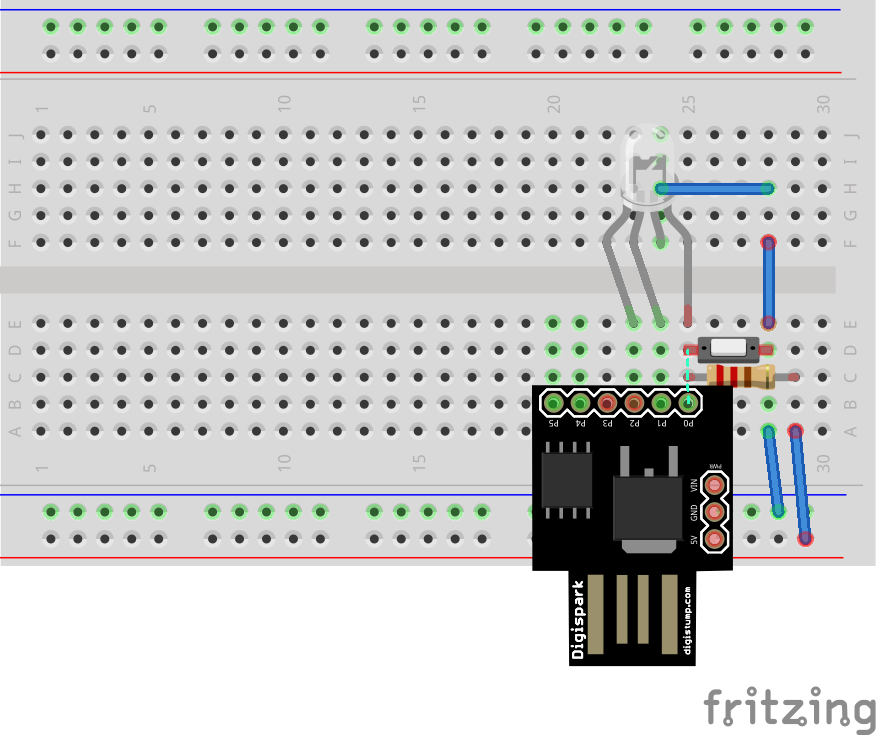
Wiring
Wiring
Comments
Only logged in users can leave comments